JBMedia

Wednesday, January 8, 2014

What would a Republican 'war on poverty' look like, circa 2016? - Yahoo News

What would a Republican 'war on poverty' look like, circa 2016? - Yahoo News
JohnButts@JBMedia - Reports:

Sticking up for the poor and disadvantaged may not be the Republican trademark, but several key Republicans in Congress – particularly those who are presidential possibles for 2016 – are working to change that image.
Among the Republicans speaking out about poverty are Sen. Marco Rubio of Florida, Rep. Paul Ryan of Wisconsin, and House majority leader Eric Cantor of Virginia. They are presenting their ideas at a time when Democrats are challenging the GOP on the issue of economic inequality (think benefits for the long-term jobless and the minimum wage) and remembering the 50th anniversary of President Lyndon Johnson’s “war on poverty.”
Republicans on the Hill are by no means united in their approach to helping the poor and the shaky middle class, but several themes are emerging. Here are five ideas prominent Republicans are putting forward.
Speak with compassion. The GOP knows it has an image problem when it comes to kindness and humanity. A Republican National Committee review of the 2012 campaign cited “the perception that the GOP does not care about people” as a “major deficiency.” A simple place to start is to change the language. Representative Ryan, speaking last May at the conservative American Enterprise Institute, acknowledged that Democrats are “speaking to a need – a need for security in a world of growing complexity.” Then he added, “The fact is, we also have to speak to this need.”
That’s why Ryan, the former vice presidential running mate to Mitt Romney, has been touring inner-city neighborhoods, formulating his antipoverty ideas, and talking about those ideas in public – for instance, at a Newseum event on poverty with NBC news anchor Brian Williams on Jan. 9 and in a Brookings Institution speech on Jan. 13.
Less Washington, more jobs. Free enterprise is the greatest job creator there is, but the federal government is a huge impediment to job growth, Republicans say. Senator Rubio, the son of immigrants, echoed many Republicans Jan. 8 when he said in an antipoverty speech that a simpler tax code, fewer federal regulations, and a lower national debt would allow “free enterprise to flourish.”
But Rubio has a more radical idea to achieve social mobility and to help people get the skills they need to work in today’s information-based economy. Standing beneath the frescoes of the Senate’s ornate Johnson room (named for President Johnson, who had also served  as a Senate majority leader), he proposed Jan. 8 to take most of the federal government's antipoverty programs, transfer the funds to a single agency, and then disperse those funds to the states to work with.
States and localities best understand the needs and conditions, and they are the best generators of innovative solutions, he said. Legislation that embodies Rubio’s idea is still under construction, but the senator has suggested that long-term jobless insurance and food stamps might be candidates ripe for dismantling and redistributing funding to the states.
School choice. Republicans see education as key to social and economic mobility, as do Democrats. The Head Start preschool program for low-income families, for instance, began as a "war on poverty" initiative on Johnson's watch. But the two political parties diverge over how best to employ education to help people advance. Representative Cantor, in prepared remarks for a speech at the Brookings Institution Jan. 8, said “school choice is the surest way to break” the cycle of poverty, emphasizing not only the need for more charter schools but also vouchers for private education. His goal is to provide school choice to every child in America within 10 years.
While many Democrats favor public charter schools, they bristle at vouchers, arguing that they undermine public education.
Enterprise zones. This is not a new idea. Republican Jack Kemp, the late New York congressman, in the 1980s championed targeting impoverished areas for development and special treatment, as did President Reagan. Now, President Obama has chosen five “promise zones” for government help through tax incentives, education grants, and housing assistance.
Enterprise zones are being pushed by Sen. Rand Paul (R) of Kentucky, but he calls them “economic freedom zones.” His focus is on almost eliminating taxes in economically distressed areas such as Detroit. And he’s talking taxes of all kinds: corporate, income, payroll, and capital gains. "What we hope to do is create taxes so low that you essentially are able to bail yourselves out, by having more money accumulate in the area over time," Senator Paul said last month.
Build stronger communities. Americans are giving, loving, and resourceful people, and those impulses need to be encouraged in communities, says the GOP's Ryan. He cites tale after tale of people and communities pulling together, from the case of his widowed mother to neighborhoods he has visited.
“We want everyone to have a chance in life – a chance to be happy. And we’re happiest when we’re together. We want to be together. It’s in our nature. We feel it in our bones,” he said in his May speech. That togetherness takes shape in the church meeting, the neighborhood watch, the food bank, the small business, he said. “The more we work together – out of our own free will – the stronger we become.”

Tuesday, January 7, 2014

NJ Woman Sues Home Developer For Failing To Disclose Racist Neighbor | News One

NJ Woman Sues Home Developer For Failing To Disclose Racist Neighbor | News One
Cyndee Phoenix

JohnButts@JBMedia _ Reports:
Cyndee Phoenix (pictured) thought she had found the perfect home in a Hamilton County, N. J., residential community to live in with her elderly parents and sister. But what Phoenix did not know and now claims was not revealed to her by the developer, Lennar Homes Corp, who promoted promises of a “wonderful lifestyle,” was that she and her family would be tormented by a neighbor who would threaten, intimidate and make racist remarks.
She is suing the developer for “knowingly concealing” that her future neighbor was a “dangerous individual,” according to Courthouse News.
Phoenix closed on her home last October and moved in a month later. Lennar Homes reportedly warned the neighbor in question, Kevin Elville Potter, about his alleged harassing behavior, requesting that he cease his hostile conduct.
The 53-year-old recent home buyer says she met Potter before she actually moved into her home. She was visiting the developer’s sales office one day and happened upon Potter when he was ranting about the lack of landscaping services to a sales rep. The rep later told Phoenix that Potter was no longer entitled to services because his home’s coverage period had expired. After Phoenix had closed on the home, she discovered that Potter was in fact no longer receiving services because of his alleged aggression towards the workers who showed up to perform their duties.
According to documents filed in Atlantic County Court, Potter began his harassing ways soon after Phoenix moved in.  Potter allegedly made “death threats to plaintiff’s sister, spit in the direction of Phoenix’s family members, made snide and racist comments about plaintiff, has taken pictures of plaintiff’s guests and stared them down in attempts to intimidate them and continued blocking plaintiff’s driveway with his parked cars.”
The complaint also describes how Phoenix is so “afraid to leave her home” and “is constantly living in fear” that she was forced to hire a security guard because the family was also allegedly stalked by Potter. Phoenix claims that her security guard was even harassed by Potter, who once reportedly followed the employee for 15 miles on the freeway.
Phoenix is reportedly seeking damages for fraud, consumer fraud, misrepresentations and omissions, and violations of New Jersey’s Planned Real Estate Development Full Disclosure Act.

Accuser finds more old messages in Bragg general's sex case :: WRAL.com

Accuser finds more old messages in Bragg general's sex case :: WRAL.com
 Brig. Gen. Jeffrey Sinclair, faces sex charges
JohnButts@JBMedia - Reports:
A soldier who had an affair with a Fort Bragg general found numerous emails and voice messages from him on an old phone last month, prompting a delay in his court-martial.
Brig. Gen. Jeffrey Sinclair faces charges that include forcible sodomy, indecent acts, violating orders and adultery. His court-martial was scheduled to begin Tuesday but has been pushed back to March 4.
The charges stem from allegations that Sinclair twice sexually assaulted a captain with whom he had a three-year affair and that he had inappropriate relationships with five other women, including some subordinates.
The former captain, who served with Sinclair in Iraq and Afghanistan, said during a pre-trial motions hearing Tuesday that she found an iPhone that she stopped using years ago in a cluttered box on Dec. 9. She found messages from Sinclair, including some under his alias of "Nathan," and immediately turned the phone over to Army investigators.
Defense attorney Richard Scheff asked why she bothered to charge up the phone and examine its content in the first place. She said she wanted to see if there was any evidence on it that either military prosecutors or Sinclair's defense team would need during the court-martial.
"I was very overwhelmed with what I found on the phone," she said.
The content of the messages wasn't detailed in court on Tuesday.
In previous hearings, Col. James Pohl, the military judge handling the case, has ruled that Sinclair's emails could be used as evidence.

Monday, January 6, 2014

State Attorney Moves To Revoke Marissa Alexander’s Bond | News One

State Attorney Moves To Revoke Marissa Alexander’s Bond | News One
Marissa Alexander
JohnButts@JBMedia - Reports:
Florida Special Prosecutor Angela Corey has filed a motion to revoke the bond of Marissa Alexander, claiming she violated conditions of her parole by running errands, reports First Coast News.
As previously reported by NewsOne, Alexander, a 33-year old Jacksonville mother of three, has spent the last 2 years behind bars serving time for a domestic violence dispute during which she fired a warning shot at her estranged husband, Rico Gray, Sr. who admitted that he had threatened to kill her.
“If my kids weren’t there, I knew I probably would have tried to take the gun from her,” Gray said. “If my kids wouldn’t have been there, I probably would have put my hand on her.” When Alexander’s defense attorney asked him what he meant by “put my hand on her,” Gray replied, “probably hit her. I got five baby mammas and I put my hands on every last one of them except for one.”
After rejecting a 3-year plea deal offered by Corey, Alexander was sentenced to 20 years to life in jail.
A  new bond hearing was initially scheduled for  Nov. 13 — because a judge ruled that there were errors in the jury instructions — but was pushed back to January 15, 2014.
Alexander was granted a pretrial release on Nov. 27 after agreeing to the following special conditions:
• Remain under the supervision of the pretrial services program at all times
• Subject to electronic monitoring through the CTC at all times
• Remain on home detention until completion of her case and will be allowed to leave her residence except for court appearances, medical emergencies and to satisfy any requirements of PSP or the CTC
• Report all required court appearances and all required appointments with he PSP or its designated service provider
• Alexander cannot change her residence without prior notice and approval by the PSP or its designated service provider
• Cannot have contact with, nor communicate by any means with Rico Gray, Sr., Pernell Gray and Rico Gray, Jr.
• Alexander shall abide by all court orders in the divorce proceedings involving Rico Gray, Sr., including all orders that pertain to child custody, exchange of child custody for visitation shall be facilitated by a third party
• Alexander shall not possess any firearms, nor shall there be any firearms in her residence at any time during her pretrial release
• Shall not consume any alcoholic beverage or drug not prescribed by a physician
• Must abide by all rules and regulations for the PSP and the CTC including random drug testing
• Alexander shall be subject to warrantless searches of her residence by CTC officers or any JSO officer conducting such a search at the direction of CTC personnel, to ensure compliance with her pretrial release conditions
Alexander’s bond was set at a total of $200,009 for three separate charges.
NewsOne contributor, Attorney and Legal Analyst Eric L. Gusterwho can frequently be seen sparring with HLN’s Nancy Grace over high-profile cases, said the laundry list of conditions is standard in a case such as Alexander’s:
“Although [the conditions of release] seem extensive, those are typical stipulations for a person in that situation,” Guster said. “Since she has been found guilty once and now may go to trial again, the court has a duty to protect all parties, witnesses and Marissa herself. Therefore, the requirements of her bond are similar to those similarly situated.”
A hearing for Corey’s motion accusing Alexander of violating her parole conditions is scheduled for Friday at 9 a.m.

Gun Violence in America | WOLB Talk 1010

Gun Violence in America | WOLB Talk 1010
Janaye Ingram
JohnButts@JBMedia - Reports:
Three years ago on January 8th, a mass shooting in Arizona took the lives of 6 innocent people and nearly killed U.S. Congresswoman Gabby Giffords. Since then, mass shootings and urban gun violence have plagued this country. When Congresswoman Giffords was shot, gun reform advocates were sure that there would be change in Washington, with members of Congress seeing one of their own as a victim of the senseless violence. But many bills failed to advance. Since then, nothing changed, and the senseless violence has continued to permeate through communities across the country.
Almost two years later in December 2012, the world stopped when a gunman entered an elementary school and killed 26 people, including 20 children. It seemed like the time to pass sensible laws.  Even Congressional Members who were members of the National Rifle Association (NRA) and represented communities in pro-gun ownership states were committed to introducing reform.
But the bi-partisan bills failed to pass and no further serious attempts have been introduced.
With each New Year comes the promise of a new opportunity – a chance to do something differently, an opportunity to improve. We have an opening to address gun violence and on January 8th, the National Action Network’s (NAN) Youth Move will memorialize the past shootings and repurpose the day as the National Youth Day of Action Against Gun Violence.
On this day, NAN chapters and other advocacy organizations will come together for community discussions and agenda setting to tackle gun violence and create opportunities for conflict resolution.
The sad fact is that urban gun violence often takes a backseat to the stories about mass shootings. Many legislators don’t take notice to the violence seen in major cities like Chicago, New York, Miami, and L.A.
It’s seen as an urban problem, something that doesn’t infiltrate the lives of people with education, opportunity or money; categories that many legislators fall in to.
When a mass shooting happens, it normally affects just about anyone and can happen just about anywhere – school, church, the mall, a movie theater — however, to the families of victims of urban gun violence, the pain is no less and the urgency is just as great.
The families of Lloyd Morgan Jr., Hadiya Pendleton, or Deidra Smith never expected to lose their loved one to a senseless shooting — but all three people are victims of urban gun violence, leaving only their memory as a guiding light to the rest of us to be resolved to peace so that others don’t share their fate.
We have a new year, a new opportunity to work on getting Congress to pass reform bills. Young people are leading this effort, and it’s their goal that adults will see them and follow suit.  These young people want to live without fear.  They want to walk in their neighborhoods and not worry that a simple misunderstanding by strangers could mean the end of their life because they turned the wrong corner.
We owe it to them to do everything we can to support their efforts.  We owe it to ourselves to not mourn another friend, family member, or loved one because we didn’t stand up when we had the chance.  It’s a new year; we need a peaceful resolution to the problem of gun violence that is gripping this nation.  What better way to do it than to pledge this year to peace.

'Saturday Night Live' Adds Sasheer Zamata, First Black Female Cast Member Since 2007 | Yahoo TV - Yahoo TV

'Saturday Night Live' Adds Sasheer Zamata, First Black Female Cast Member Since 2007 | Yahoo TV - Yahoo TV
JohnButts@JBMedia - Reports:
After facing criticism over a lack of color in its female cast, “Saturday Night Live” has added Sasheer Zamata, an African-American from Brooklyn, to its lineup as a featured player, NBC announced today.
Zamata is the late night sketch show’s first black female cast member since the biracial Maya Rudolph departed in 2007.
Executive producer Lorne Michaels got heat when he added six new cast members at the start of this season, but none were black women. The problem became more glaring when “Scandal” star Kerry Washington hosted in early November. Washington's opening sketch even poked fun at the issue; with her presence, “SNL” was able to portray key figures like Michelle Obama and Beyonce.
After Washington’s hosting gig made clear how much the show needed a black woman in the cast, Michaels did something he’s never done before: He held targeted auditions with female African-American comedians.
Zamata beat out two dozen other hopefuls. The University of Virginia grad trained at the Upright Citizens Brigade (a major feeder to “SNL”) and has performed at comedy festivals and created videos for College Humor. She also appeared on ABC's hidden-camera summer series, "Would You Fall For That?"


/WOULD YOU FALL FOR THAT? - From the creators of âWhat Would You Do?â comes âWould You Fall for That?â â a one …
Plus, she has a very famous fan in “Girls” creator Lena Dunham, who tweeted her approval last month.

Zamata will make her debut on January 18 in the year’s first "SNL" episode, hosted by Drake.
"Saturday Night Live" airs Saturdays at 11:30 p.m. on NBC.

Monday, December 30, 2013

Ani DiFranco Cancels 'Righteous Retreat' at Former Slave Plantation | Yahoo Music - Yahoo Music

Ani DiFranco Cancels 'Righteous Retreat' at Former Slave Plantation | Yahoo Music - Yahoo Music
JohnButts@JBMedia - Reports:
Ani DiFranco's fans have spoken ... and she's heard them loud and clear. The feminist folk singer has nixed her "Righteous Retreat" after receiving complaints about the gig being held at Nottoway Plantation in Louisiana, where hundreds of slaves once toiled and which is now owned by the conservative Paul Ramsey Group.
"I have heard you: all who have voiced opposition to my conducting a writing and performing seminar at the Nottoway Plantation," DiFranco wrote Sunday in a post on her blog. "I have decided to cancel the retreat."
That retreat had offered fans a chance to "develop one's singular creativity" through various workshops with DiFranco for four days at a price tag of more than $1,000.
In her blog post, DiFranco went on to claim that when she agreed to participate, she didn't know the exact location, only that it would be "not too far outside of New Orleans," making it possible for her to come home to her own bed each night. Once she discovered it was going to be held at "a resort on a former plantation, I thought to myself, 'whoa,' but I did not imagine or understand that the setting of a plantation would trigger such collective outrage or result in so much high velocity bitterness."
That "collective outrage" DiFranco was referring to included a slew comments on the event's now-deleted Facebook page, or a change.org petition calling for her to cancel the event.
The petition, launched by Sara Starr of Chapell Hill, North Carolina, says that "holding a workshop even on a plantation in a town founded by racists ... is insulting to black feminists and black queer individuals and is a very blatant display of racism on [DiFranco's] part."
By Sunday, more than 2,500 people had signed the petition asking DiFranco to cancel the event, with many leaving comments, such as Blaise Parker of Athens, Georgia. "Ani, this is some bulls--t," Parker wrote. "I have admired you and supported you financially for almost half my life. I am seriously disappointed."
In an attempt to placate her outraged fans, DiFranco explained why she pulled the plug on the event. "Let me just concede before more divisive words are spilled," she wrote. "I obviously underestimated the power of an evocatively symbolic place to trigger collective and individual pain. I believe that your energy and your questioning are needed in this world. I know that the pain of slavery is real and runs very deep and wide. however, in this incident I think is very unfortunate what many have chosen to do with that pain. I cancel the retreat now because I wish to restore peace and respectful discourse between people as quickly as possible."
Instead of moving the retreat to another location, DiFranco has completely canceled it. The blanket cancellation also means she won't be paying a visit to the Roots of Music, a New Orleans music school for underprivileged youths.
Here's the rub. DiFranco points out that the site of the Roots of Music also has ties to slavery, but she adds, "I believe that the existence of Roots of Music in this building is transcendent and it would have been a very inspiring place to visit."
Lest fans continue to question DiFranco's views on racism, the singer-songwriter actually backed out of an appearance on the "Late Show With David Letterman" back in 2001, after being told she could not perform her politically charged song "Subdivision" — a composition centering around racial tension and its devastating effects on urban America.

Friday, December 27, 2013

American Al-Qaeda Captive Warren Weinstein Seeks Obama's Help - Yahoo News

American Al-Qaeda Captive Warren Weinstein Seeks Obama's Help - Yahoo Ne

.
Kidnapped American Appeals for Release
 JohnButts@JBMedia - Reports:
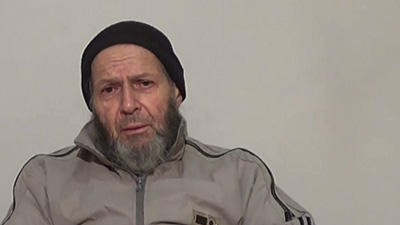
An elderly American man kidnapped and believed to be held captive by Al Qaeda for more than two years has a direct message for PresidentObama: He wants to come home.
Warren Weinstein, 72, delivered the message in a new video released by Al Qaeda's media wing. Weinstein, who suffers from a heart condition and requires medication, is seen wearing a grey jump suit slouching in a chair, with a grey wall behind him. He asks Obama to negotiate directly for his release.
"Mr. Obama, you're a family man," Weinstein says
"You understand the deep mental anxiety and anguish that I have been experiencing for these past more than two years. And therefore I'm appealing to you on a humanitarian basis, if nothing else, and asking that you take the necessary actions to expedite my release and my return to my family and to my country."
It's the first proof of life video of Weinstein in more than a year when Al Qaeda released a similar video. In that video, Weinstein suggested he would be killed unless the U.S. government met his captors' demands, which included releasing all prisoners from Guantanamo Bay. They also demanded an end to all U.S. drone strikes in Afghanistan, Pakistan, Yemen, and elsewhere.
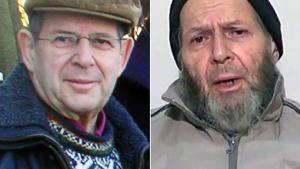
Unlike the previous video, today's video shows Weinstein sporting a thick graying beard and trimmed moustache. It's not possible to determine the state of Weinstein's health from the video alone, but he appears forlorn, his eyes watering at several points, admitting he's not in good health and that "the years have taken their toll."
The video was emailed anonymously to a handful of reporters in Pakistan, along with a letter that was allegedly written by Weinstein himself. In the letter, he asks the media to "mount a campaign to get the American government to actively pursue my release and to make sure that I am not forgotten and just become another statistic."
The letter is signed "Cordially yours, Warren Weinstein."
State Department spokeswoman Jen Psaki released a statement saying, "We're working hard to authenticate this latest report, but we reiterate our call that Warren Weinstein be released and returned to his family. Particularly during this holiday season - another one away from his family - our hopes and prayers are with him and those who love and miss him."
Weinstein was working as a contractor for USAID in 2011 when gunmen broke into his home in the Pakistani city of Lahore, Pakistan's second largest city. U.S. officials have long believed he was quickly spirited away to the lawless tribal region along Pakistan's border with Afghanistan. In previous audio tapes, Al Qaeda's new leader , Ayman Al Zawahiri, implied that he was directly holding Weinstein captive.

Monday, December 23, 2013

NYPD: Father throws son, himself off building - Yahoo News

NYPD: Father throws son, himself off building - Yahoo News
JohnButts@JBMedia - Reports:
A father threw his young child off the roof of a 52-story Manhattan apartment building in a murder-suicide on the first day he was allowed to be alone with the boy amid an ugly custody battle with the mother, police officials said Monday.
"There was a history of domestic turmoil," Police Commissioner Raymond Kelly told reporters.
Dmitriy Kanarikov picked up his 3-year-old son at 10 a.m. Sunday at a Manhattan police precinct — a neutral site negotiated in advance by the parents — to spend time with him for the first time "outside of some sort of institutional setting," Kelly said.
"He picked up the son and we all know now tragically he went to a building. ... (and) took the son to the roof," the commissioner said. "All indications are he threw him off and that's when he jumped himself."
A friend of Kanarikov had once lived in the building, located a short distance away from Columbus Circle and Lincoln Center. Investigators recovered a security video showing the father and son entering without being stopped by the doorman, and located Kanarikov's Lexus parked outside.
Officers responding to an emergency call reporting two jumpers from the building on the Upper West Side around noon Sunday found Kanarikov, 35, of Brooklyn, and the boy on the lower rooftops of two separate nearby buildings.
The man was pronounced dead at the scene and his son, Kirill Kanarikov, was pronounced dead at a hospital, police said. A witness said the boy was wearing Christmas pajamas.
The motive behind the tragedy remained murky on Monday. Kelly said there was no note found, and investigators have no evidence Kanarikov ever threatened to harm his son. However, at one point, he had told his wife that "unless she signed over the house to him and some undisclosed property, he was going to take the child," Kelly said.
Kanarikov and his wife married in 2009 and lived in Brooklyn, where their son was born a year later. They separated last year, and the mother and son moved to New Jersey and got an order of protection.
It's the second time this year that a parent and child have been involved in a fatal plunge from a New York apartment building.
In March, a woman clutching her baby son in her arms plunged eight stories out of a Harlem apartment window to her death, but the 10-month-old survived. Authorities found a suicide note in her home.

Wednesday, December 18, 2013

US Senate passes budget deal - Yahoo News

US Senate passes budget deal - Yahoo News
The US Senate passed a compromise two-year budget accord Wednesday, marking a truce in the fiscal wars that have plagued Washington and reducing the likelihood of a government shutdown in January.
The measure, which passed 64-36 with the support of nine Republicans and the entire Democratic caucus, lays out top-line spending limits for 2014 and 2015, while erasing $63 billion in automatic spending cuts that were to kick in on January 1.
It is expected to be signed by President Barack Obama before he heads to Hawaii on Friday for his Christmas break.
The legislation was one of the final major accomplishments for Congress in 2013, which by all accounts has been a miserable year for US lawmakers.
Following the expected approval of a massive defense spending bill later this week as well as several executive and judicial nominations, the Senate heads to recess until early January.
Budget experts from the Senate and House of Representatives have until January 15 to craft a series of spending bills under the new limit, or risk another shutdown like the one that paralyzed Washington in October.
The bill increases the $967 billion cap for 2013 spending to $1.012 trillion next year and $1.014 trillion in 2015, and brings some normalcy to a process recently rocked by chaos.
Many Republicans including Senate Minority Leader Mitch McConnell voted against the deal, arguing it slightly increases spending, breaking the limits set in 2011 legislation.
But for others, there was a sense of relief that Congress managed to pass its first budget agreement in years.
"With passage of this compromise budget deal, we'll replace $63 billion in non-strategic sequester cuts and prevent another government shutdown, restoring much-needed certainty to... our economy as a whole," Senator Tim Kaine said shortly after passage.
"There is more work to be done to replace the remaining non-strategic sequestration cuts and address our long-term fiscal challenges, but Congress has now shown that we can work together in a bipartisan way, as the American public demands and deserves."
The legislation was one of the final major accomplishments for Congress in 2013, which by all accounts has been a miserable year for US lawmakers.
Following the expected approval of a massive defense spending bill later this week as well as several executive and judicial nominations, the Senate heads to recess until early January.
Budget experts from the Senate and House of Representatives have until January 15 to craft a series of spending bills under the new limit, or risk another shutdown like the one that paralyzed Washington in October.
The bill increases the $967 billion cap for 2013 spending to $1.012 trillion next year and $1.014 trillion in 2015, and brings some normalcy to a process recently rocked by chaos.
Many Republicans including Senate Minority Leader Mitch McConnell voted against the deal, arguing it slightly increases spending, breaking the limits set in 2011 legislation.
But for others, there was a sense of relief that Congress managed to pass its first budget agreement in years.
"With passage of this compromise budget deal, we'll replace $63 billion in non-strategic sequester cuts and prevent another government shutdown, restoring much-needed certainty to... our economy as a whole," Senator Tim Kaine said shortly after passage.
"There is more work to be done to replace the remaining non-strategic sequestration cuts and address our long-term fiscal challenges, but Congress has now shown that we can work together in a bipartisan way, as the American public demands and deserves."

Tuesday, December 17, 2013

Black Firearms Club Hopes To Help Curb Youth Violence

Black Firearms Club Hopes To Help Curb Youth Violence
 Black Firearms Club e1387299728452 photo

JohnButts@JBMedia Reports:
More than 200 people have been killed this year in Baltimore. Most of them were Black, and most of them were shot to death, despite Maryland having one of the nation’s toughest gun laws. This comes two years after the city recorded its lowest murder rate in more than two decades.
Members of one of the few African-American social firearm clubs in the nation think teaching young people different ideas about guns might help deter them from a life of violence.
The Maryland Tenth Cavalry Gun Club, based near Baltimore in Marriottsville, Md., is an African-American firearms club that focuses as much on discipline and Black history as it does on shooting. It has 163 members and takes its name from the 9th and 10th Army Cavalry, an African-American regiment known as “Buffalo Soldiers.”
Ken Brown is a big man, and the Ruger Mark III .22 long rifle semi-automatic pistol he’s loading at an outdoor gun range looks almost tiny in his hands. He’s hoping the lessons he teaches and practices at the range where the Maryland Tenth Cavalry Gun Club shoots are something he can pass on to young people in a larger context.
“See, the whole shooting discipline in and of itself is behaving responsibly, and that’s what we hope to give to our youth. [Behaving] responsibly can be a lot of fun,” Brown says.
Brown says the club proudly focuses on teaching people about what he calls the deep history of Blacks and firearms. One of his favorite examples is Salem Poor, an enslaved African-american man from Massachusetts who bought his freedom in 1769 and fought at Bunker Hill in 1775.
Brown thinks knowledge about this history will help steer kids away from drugs and gangs: “We have something that will give them a stake in this country.”
Club member Courtney White-Brown owns a firearms and security training academy. She believes young people thinking of heading into the drug trade or joining gangs could be dissuaded by learning that there is honor and responsibility in the association of African-Americans and guns.
“It also gives you an opportunity for… education, scholarship activity,” White-Brown says.
She thinks teaching teens the discipline of using firearms also gives them a skill that can take them away from a life of crime: “If these young people would learn properly, safe gun handling, and the proper use their firearms, then they would not be swayed or persuaded by the negative element.”
But not everyone feels the same way.
“We know that some kinds of mentoring programs are effective,” says Dewey Cornell, a clinical psychologist and University of Virginia education professor. Cornell, director of the Youth Violence Project, agrees mentoring can be helpful. But in an age where people with firearms training have committed mass shootings, Cornell says groups that want to help young people should look to other programs.
“It’s much more important to have a relationship and to be dealing with the other problems in a young person’s life, which sometimes require more than mentoring — if there are mental health issues, if there are gang issues, if there are family issues,” Cornell says.
Back at the Maryland Tenth Cavalry Gun Club, Brown admits there are some problems, such as working with young people who have already committed felonies, that the club isn’t equipped to deal with.
But fellow club member Larry Smith, a retired Social Security worker, says that as members of a community being decimated by violence, they have a special calling to get involved.
“It’s up to us as African-Americans to address these issues,” says Smith, who like some other club members, grew up hunting. “So I know that Black people can be around guns and not shoot each other.”
Smith says the African-American community needs to develop a healthy respect for guns, and he hopes that will lower the level of violence.

Santa''s Color: How A Fictional Character Represents Race In America

Santa''s Color: How A Fictional Character Represents Race In America

Megyn Kelly Santa Is White e1387314117258 photo
Intellectual giant Megyn Kelly

JohnButts@JBMedia - Reports:
Remember just last week when we talked about the picture I posted on social media of the guy who looked like the popular depiction of Jesus selling Christmas trees in my neighborhood?
Well this week I’ve been outdone by a Fox News anchor who emphatically stated not only that Jesus was White, but that Santa Claus is White too.
Oh boy, that really got everyone up in arms. News columns were written, blogs, editorials. It became the lead story on the news channels. I even covered it on my own show on CNN.
And after I played the Fox interview for the panel on my show, I somehow found it hard to control my laughter.
I guess it was a confluence of events.  One was that I was actually discussing the topic on national television for obvious reasons.
The other was, in the moment, the host’s emphasis on Santa’s race being White just struck me as funny, even absurd.
Even more absurd was that no one on her show challenged her or even batted an eye to her Santa and Jesus are White declaration.
But as someone who has been misquoted and misinterpreted, my first inkling was to cut the host some slack. If she meant that the traditional and popular depiction of Santa is White, then she is absolutely right.
But that’s not what she said.
Her quote was, “For all you kids watching at home Santa is just White.”
A few days later she clarified by saying almost verbatim what I said; that she meant the popular depiction of Santa is White.
Again, that was not her original statement.
And that’s not what most people in the country heard.
Even if we all got it wrong, there’s still something presumptive about her original statement.
It presumes White as the default race in a country with rapidly shifting demographics.
I won’t go into too much history on Santa but the person who Santa is based on, St. Nicholas, he was Greek and from a part of the world now known as southern Turkey – not a place of fair-skinned rosy cheeked people who look like the current popular versions of Santa.
The news anchor later said she was surprised that her off-hand comment spoken in jest became a national firestorm.
I’ll give her the benefit of the doubt and take her at her word.
But what she should be aware of is that there’s a reason certain phrases become clichés.
One of them goes like this, “many a truth is often spoken in jest.”
And by saying what she said she may have unwittingly exposed a deeper truth not only about her own beliefs, but about many people’s beliefs in America- that Santa is and should be just like them- White.

Friday, December 13, 2013

North Korea executes leader's uncle as a traitor - Yahoo News

North Korea executes leader's uncle as a traitor - Yahoo News
JohnButts@JBMedia - Reports:
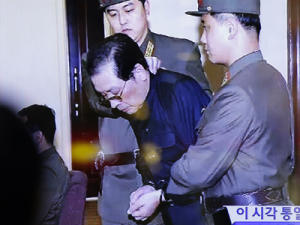
North Korea said Friday that it executed Kim Jong Un's uncle as a traitor for trying to seize supreme power, a stunning end for the leader's former mentor, long considered the country's No. 2.
In a sharp reversal of the popular image of Jang Song Thaek as a kindly uncle guiding young leader Kim Jong Un as he consolidated power, the North's official Korean Central News Agency indicated that Jang instead saw the death of Kim's father, Kim Jong Il, in December 2011 as an opportunity to challenge his nephew and win power.
Just days ago, North Korea accused Jang, 67, of corruption, womanizing, gambling and taking drugs, and said he'd been "eliminated" from all his posts. But Friday's allegations, which couldn't be independently confirmed, were linked to a claim that he tried "to overthrow the state by all sorts of intrigues and despicable methods with a wild ambition to grab the supreme power of our party and state."
Pyongyang's statement called him a "traitor to the nation for all ages," ''worse than a dog" and "despicable human scum" who planned a military coup — rhetoric often reserved in state propaganda for South Korean leaders. State media said Jang was tried for treason by a special military tribunal and executed Thursday.
In the North Korean capital, people crowded around billboards in a subway station displaying the morning paper and news of the execution. North Korea's main newspaper Rodong Sinmun ran a headline on its website that said: "Eternal traitor firmly punished."
A radio broadcast of the news was piped into the subway. People sat quietly and listened as the announcer listed Jang's crimes.
During his two years in power, Kim Jong Un has overseen nuclear and missile tests, other high-profile purges and a barrage of threats this spring, including vows of nuclear strikes against Washington and Seoul. In contrast, his father, Kim Jong Il, took a much lower public profile when he rose to power after the death of his father, Kim Il Sung, in 1994.
It's not clear what Jang's execution and Kim Jong Un's very public approach to leadership say about the future of a country notoriously difficult for outsiders to interpret. Some analysts see the public pillorying of such a senior official, and one related to the leader, as a sign of the young ruler coming into his own and solidifying his grip on power.
"Whatever problems it faced, North Korea has usually acted in a way to bolster its leaders," said Chin Hee-gwan, a professor at South Korea's Inje University. "By showing a little bit of a reign of terror, it's likely that Kim Jong Un's power will be further consolidated."
But others see signs of dangerous instability and an indication that behind the scenes, Kim Jong Un's rise has not been as smooth as previously thought.
"North Korea's announcement is like an acknowledgement that Kim Jong Un's government is still in a transitional period," said Lim Eul Chul, a North Korea expert at South Korea's Kyungnam University.
The execution could be followed by more purges, Lim predicted, but Kim Jong Un will eventually ease up in his approach to domestic affairs because he'll face a bigger crisis if he fails to revive the struggling economy and improve people's living standards.
There are fears in Seoul that the removal of Jang and his followers — two of his aides were executed last month, South Korea's National Intelligence Service said — could lead to a miscalculation or even an attack on the South.
Top South Korean presidential security and government ministers held an unscheduled meeting Friday to discuss Jang's execution and its aftermath, according to the presidential Blue House. Seoul's Defense Ministry said the North Korean military has not shown any unusual activities and that there is not any suspicious activity at the North's nuclear test site and missile launch pads.
There are also questions about what the purge means for North Korea's relationship with its only major ally, China. Jang had been seen as the leading supporter of Chinese-style economic reforms and an important link between Pyongyang and Beijing.
Although the high-level purges over the last two years could indicate confidence, Victor Cha, a former senior White House adviser on Asia, said he sees signs of "a lot of churn in the system."
"If he has to go as high as purging and then executing Jang, it tells you that everything's not normal in the system," said Cha, an analyst at the Center for Strategic and International Studies think tank in Washington. "When you take out Jang, you're not taking out just one person — you're taking out scores if not hundreds of other people in the system. It's got to have some ripple effect."
North Korea has recently turned to attempts at diplomacy with South Korea and the United States. But tensions have remained high since Pyongyang's threats in March and April, which included warnings that it would restart nuclear bomb fuel production.
There was no immediate word about the fate of Jang's wife, Kim Kyong Hui, the younger sister of Kim Jong Il, although some analysts believe that because she is directly related to the nation's founder, Kim Il Sung, and has been reportedly ill, she may be spared Jang's fate. She was also seen as an important mentor to Kim Jong Un after her brother's 2011 death.
The White House said that "if confirmed, this is another example of the extreme brutality of the North Korean regime."
The KCNA report was unusually specific in its accusations at times. For instance, it criticized Jang for not rising and applauding his nephew's appointment to a senior position because Jang "thought that if Kim Jong Un's base and system for leading the army were consolidated, this would lay a stumbling block in the way of grabbing the power."
One resident in Pyongyang, Kim Un Song, a doctor at a hospital, said she was surprised at the news but supported the execution.
"We trust and believe only in Marshal Kim Jong Un. Anti-revolutionary elements can't shake our faith. I don't know if there are more out there, but they will never shake our faith," she said. "It's very good that he was executed."

Tuesday, December 10, 2013

Danny Glover Breaks Down The South Africa-Cuba Connection | WOLB Talk 1010

Danny Glover Breaks Down The South Africa-Cuba Connection | WOLB Talk 1010
JohnButts@JBMedia - Reports:
The world may be abuzz over President Barack Obama’s decision to shake the hand of Cuban leader Raul Castro at the memorial service for Nelson Mandela, but the late South African president most certainly would have approved.
After all, Mandela drew inspiration from the Cuban revolution, which culminated in Fidel Castro taking power in 1959. Among the stated goals of the revolution was ending segregation– America’s own version of apartheid had provided an economic incentive for similar policies in Cuba (PDF) — though that effort still has a way to go before it’s a reality.
Then there was Cuba’s role in Namibia’s war for independence from white-controlled South Africa. On NewsOne Now with Roland Martin, actor and activist Danny Glover, who played Mandela in a 1987 television movie, said that was a reason that Mandela would not disavow Castro, despite intense pressure.
“Most of us  know about the audio clip when Mandela at his inauguration met Castro and pushed away his hand,” Glover recalled, “and grabbed him and held him — it’s clear to him and most of the audience — he said Castro, ‘Without you, this doesn’t happen.’”
Cuban troops helped to keep South Africans from derailing Namibian independence, Glover continued. ”People who followed that, moment to moment, from 1975 through that period of time that ended up with the independence of Namibia, understood clearly the role that Cuban troops had played.”
http://wolbbaltimore.com/2006692/danny-glover-breaks-down-the-south-africa-cuba-connection/
http://www.blogger.com/blog-this.do?zx=wb24boib12jk

Reid says Senate will not extend farm law - Yahoo News

Reid says Senate will not extend farm law - Yahoo News
JohnButts@JBMedia - Reports:
Government dairy subsidies that affect the cost of a gallon of milk are set to expire at the end of the year as farm-state lawmakers said Tuesday that they do not expect to have a new farm bill — or an extension of current law — before Jan 1.
Expiration of the current dairy subsidies triggers 1930s and 1940s law, outdated statutes that could upend the commercial dairy market and eventually cause the price of milk to rise. But Senate Agriculture Chairwoman Debbie Stabenow, a Democrat, said she has assurances from the Agriculture Department that the price spikes would not happen before the end of January, and she and House Agriculture Chairman Frank Lucas, a Republican, say they hope to have a final farm bill deal by then.
The House and Senate have passed separate versions of the five-year, roughly $500 billion bill, but with widespread differences over crop subsidies and how much to cut food stamps.
"We will be ready to vote in January," Stabenow said after a meeting with Lucas Tuesday.
House Speaker John Boehner said last week that he favors an extension, and House leaders have reserved space on their agenda this week for extending the current law.
But Senate Majority Leader Harry Reid balked at that plan. "Let them vote on it. We're not going to do it," he said Tuesday.
Stabenow said a short-term extension could allow subsidies called direct payments to continue. Those subsidies are paid to farmers whether they plant or not and have come under political fire from conservatives and others who have lobbied for less spending on farm programs. Both the House and Senate farm bills would eliminate the subsidies and create new ones.
Finding a compromise on cuts to the nation's $80 billion-a-year food stamp program has been the toughest obstacle in the talks between the House and the Senate. The House passed a bill this summer that would cut $4 billion from food stamps annually and allow states to create new work requirements for some recipients. The Democratic Senate, backed by President Barack Obama, passed a farm bill with a $400 million annual cut, or a tenth of the House cut.
Negotiators have focused on cracking down further on a practice in some states of giving low-income people as little as $1 a year in home heating assistance, even when they don't have heating bills, in order to make them eligible for increased food stamp benefits. The Senate found its $400 million in annual cuts by proposing that states have a $10 heating assistance threshold for such eligibility, while the House doubled that cut by requiring that recipients receive $20 annually — bringing the savings to around $800 million a year.
North Dakota Sen. John Hoeven, a Republican who sits on the House-Senate conference committee, confirmed that negotiators have floated as a compromise $800 million in annual cuts plus pilot programs that would create new work requirements in a handful of states. But he stressed that there is not a final deal.
Hoeven said he agreed that the Senate should not pass an extension.
"We want to keep the pressure on to get a farm bill done," he said.
Negotiators are also working out how farm subsidies should be restructured in the absence of the direct payments. The two chambers have argued over how to replace those payments, with major farm groups squabbling over whether subsidies should kick in based on crop prices or farmer revenue, and how to count the acreage on which the subsidies are based.
___

Obama: Make Mandela's life work your own

Obama: Make Mandela's life work your own
JohnButts@JBMedia - Reports:
Celebrating one of his personal heroes, President Barack Obama praised Nelson Mandela as the last great liberator of the 20th century, urging the world to carry on his legacy by fighting inequality, poverty and discrimination.
At a memorial service in Johannesburg, Obama compared the former South African President to Mahatma Gandhi, Martin Luther King Jr. and Abraham Lincoln.
"Nothing he achieved was inevitable," Obama said. "In the arc of his life, we see a man who earned his place in history through struggle and shrewdness, persistence and faith. He tells us what's possible not just in the pages of dusty history books, but in our own lives as well."
The crowd at the half-filled stadium erupted in applause each time Obama's name was mentioned or his image was shown on the screen. Dozens gathered below the box seats where Obama and other U.S. presidents sat, waving and snapping pictures of the leaders.
As if to underscore the spirit of reconciliation that Mandela's life embodied, Obama shook hands with Cuban President Raul Castro as he made his way down a line of world leaders gathered to honor the anti-apartheid leader. It was a rare moment of accord for the leaders of the two Cold War enemies.
Calling himself a beneficiary of Mandela's struggle, Obama traced the influence that Mandela's story has had on his own life, disclosing that he asks himself how well he's applied Mandela's lessons to himself as a man and as president.
He said in the U.S., South Africa and around the world, people must not allow progress that's been made to cloud the fact that more work must be done.
"We, too, must act on behalf of justice. We, too, must act on behalf of peace. There are too many of us who happily embrace Madiba's legacy of racial reconciliation, but passionately resist even modest reforms that would challenge chronic poverty and growing inequality," Obama said, referring to Mandela by his traditional clan name.
Extolling Mandela as practical but unyielding on his core principles, Obama said it was because Mandela could admit to being imperfect that the world loved him and continues to learn so much from his example. "He was not a bust made of marble. He was a man of flesh and blood," Obama said.
He said Mandela had changed both laws and hearts, inspiring those around him by reconciling with the jailers who kept him prisoner for 27 years. In trusting others despite the injustices he suffered, Mandela showed that the cruelty of the past must be confronted with truth, generosity and inclusion, Obama said.
"We will never see the likes of Nelson Mandela again," Obama said. "But let me say to the people of Africa, and young people around the world: You can make his life's work your own."
Joining Obama on the 16-hour trip from Washington for the ceremony were first lady Michelle Obama, former President George W. Bush and his wife, Laura, and former Secretary of State Hillary Rodham Clinton. Former Presidents Bill Clinton and Jimmy Carter also attended the memorial service.

Monday, December 9, 2013

Audit shows problems with NC Tracks | abc11.com

Audit shows problems with NC Tracks | abc11.com
JohnButts@JBMedia - Reports:
A new, sharply critical audit about the Department of Health and Human Services' NC Tracks program was released to the public Monday afternoon. It points out hundreds of flaws in the Medicaid payment program.

The audit, according to State Auditor Beth Wood, boils down to time -- just how quickly problems are solved.
The audit hammers DHHS for not making sure problems with the Medicaid payment system are fixed as quickly as possible. It's all about paying businesses that help people on Medicaid.
Many providers, from businesses to all those that provide the spectrum of services that people on Medicaid might use, haven't gotten paid in months.
The payment system rolled out this summer called NC Tracks. It has been loaded with problems.
According to the audit, NC Tracks has had more than 3,000 glitches including software and hardware. More 650 of those glitches are still active.
While they are being identified, Wood told ABC11 that DHHS doesn't require the vendor responsible for fixing them to say how long that will take, which leaves the department in the dark.
"They don't really know if it got fixed in five days or 10 days," said Wood. "Or they should have been fixed in five days.  The other thing is, DHHS has talent over there that can say 'Five days?' Really, that should take a couple of days.'  Again, there's no tracking. There's no watching. There's no oversight over how fast things are getting fixed."
The bulk of the report is about the glitches that are behind vendors not getting paid on time, but the audit found another problem with NC Tracks.
It involves an open, revolving door that allows state employees who work with vendors for the state to quit their jobs and immediately go work for those vendors.

'Bill of Rights' to Stop 'Shopping While Black' - The Root

'Bill of Rights' to Stop 'Shopping While Black' - The Root
JohnButts@JBMedia - Reports:
On Monday, retail executives and civil rights leaders met to hash out a black shopper's "bill of rights," the New York Daily News reports.
The bill of rights, created after a rash of racial profiling incidents in which black shoppers claimed that they were arrested, or accosted or both after making purchases from the retail store, was created to aid shoppers in knowing the law.
The Rev. Al Sharpton told the Daily News that the lists, which are to be posted on retailers' websites and inside the store this week, will hopefully prevent the harassment of black customers whose only crime was purchasing an expensive item.  
"The meeting was positive but it's nowhere near where we hope to end up. At least now we're having an acknowledgment that there's a problem. So it is a step in the right direction but we're not home yet," the civil rights leader said.
According to the NY Daily News, stores have agreed to post a bill of rights informing customers that profiling and unreasonable searches are prohibited. The list also states that if a store employee is caught profiling a customer, they will be a disciplined or fired, the NY Daily News reports.
Sharpton told the NY Daily News that the civil rights group was hoping to sit-down with incoming Police Commissioner Bill Bratton, who takes over for current police commish, Raymond Kelly in January.
"We will have to sit in the room with him and the retailers and we hope to do that in the next few days, I'm not talking about weeks. ... We want to have an agreement with him coming in," Sharpton said.
The Daily News first reported the racial profiling scandal after 19-year-old Trayon Christian, said that he was arrested and detained after purchasing a $350 Salvatore Ferragamo belt from Barneys. Shortly after Christian's claim, Kayla Phillips, 21, alleged that police too harassed her after purchasing a $2,500 orange suede Céline bag from Barneys.
But Barneys wasn't the only retail store to feel the heat, Macy's would be accused of racial profiling as two more black shoppers stepped forward with similar claims.
Actor Rob Brown, 29, and Art Palmer, 56, a personal trainer, both said cops stopped them after shopping at the department store.
Both department stores deny that denied racial profiling the customers and blamed an aggressive New York Police Department for the shoppers being stopped. It is this reason that Sharpton believes meeting with the NYPD is paramount.
"The meeting has to be about where does NYPD take charge and where do stores take charge and who's doing the profiling? And where are the boundaries? Who decides who's a suspect?" he told the Daily News

Monday, December 2, 2013

GOP activist Art Pope and NC NAACP President William Barber debate on sidewalk | abc11.com

GOP activist Art Pope and NC NAACP President William Barber debate on sidewalk | abc11.com
JohnButts@JBMedia - Reports:
Television cameras were rolling Monday as North Carolina NAACP President William Barber and State Budget Director Art Pope exchanged words outside the government office building where Pope works.

Click here for video of the exchange
It happened as Barber was holding a news conference urging Pope to renounce GOP initiatives approved by Governor Pat McCrory and the legislature.
Pope - a well known Republican activist - has used his money to promote conservative causes in North Carolina. Now, the NAACP says it plans to picket outside discount stores owned by Pope's family business - accusing Pope of supporting policies that hurt North Carolina workers.
Pope asked Barber whether he was trying to close Maxway, Roses, and other stores that create jobs in communities. He said a third of his store's employees are African-American and unemployment has dropped under the McCrory administration.
"That is helping people get jobs. That's not hurting them, that's helping them," said Pope.
Barber responded that Republicans have cut unemployment benefits, denied Medicaid expansion and worked to restrict voting rights.

Saturday, November 30, 2013

Leaked paper shows major policy split in UN on international drug war | The Raw Story

Leaked paper shows major policy split in UN on international drug war | The Raw Story
JohnButts@JBMedia - Reports:
Major international divisions over the global “war on drugs” have been revealed in a leaked draft of a UN document setting out the organisation’s long-term strategy for combating illicit narcotics.
The draft, written in September and seen by the Observer, shows there are serious and entrenched divisions over the longstanding US-led policy promoting prohibition as an exclusive solution to the problem.
Instead, a number of countries are pushing for the “war on drugs” to be seen in a different light, which places greater emphasis on treating drug consumption as a public health problem, rather than a criminal justice matter.
It is rare for such a document to leak. Normally only the final agreed version is published once all differences between UN member states have been removed.
The divisions highlighted in the draft are potentially important. The document will form the basis of a joint “high-level” statement on drugs to be published in the spring, setting out the UN’s thinking. This will then pave the way for a general assembly review, an event that occurs every 10 years, and, in 2016, will confirm the UN’s position for the next decade. “The idea that there is a global consensus on drugs policy is fake,” said Damon Barrett, deputy director of the charity Harm Reduction International. “The differences have been there for a long time, but you rarely get to see them. It all gets whittled down to the lowest common denominator, when all you see is agreement. But it’s interesting to see now what they are arguing about.”
The current review, taking place in Vienna at the UN Commission on Narcotic Drugs, comes after South American countries threw down the gauntlet to the US at this year’s Organization of American States summit meeting, when they argued that alternatives to prohibition must be considered.
Countries such as Colombia, Guatemala and Mexico have become increasingly critical of the UN’s prohibition stance, claiming that maintaining the status quo plays into the hands of the cartels and paramilitary groups.
The draft reveals that Ecuador is pushing the UN to include a statement that recognizes that the world needs to look beyond prohibition. Its submission claims there is “a need for more effective results in addressing the world drug problem” that will encourage “deliberations on different approaches that could be more efficient and effective”.
Venezuela is pushing for the draft to include a new understanding of “the economic implications of the current dominating health and law enforcement approach in tackling the world drug problem”, arguing that the current policy fails to recognize the “dynamics of the drug criminal market”.
Experts said the level of disagreement showed fault lines were opening up in the globally agreed position on drug control. “Heavy reliance on law enforcement for controlling drugs is yielding a poor return on investment and leading to all kinds of terrible human rights abuses,” said Kasia Malinowska-Sempruch, director of the Open Society Global Drug Policy Program. “The withdrawal from the most repressive parts of the drug war has begun – locally, nationally and globally.”
Attacking the status quo is not confined to South American countries, however. Norway wants the draft to pose “questions related to decriminalization and a critical assessment of the approach represented by the so-called war on drugs”. Switzerland wants the draft to recognize the consequences of the current policy on public health issues. It wants it to include the observation that member states “note with concern that consumption prevalence has not been reduced significantly and that the consumption of new psychoactive substances has increased in most regions of the world”. It also wants the draft to “express concern that according to UNAids, the UN program on HIV/Aids, the global goal of reducing HIV infections among people who inject drugs by 50% by 2015 will not be reached, and that drug-related transmission is driving the expansion of the epidemic in many countries”.
The EU is also pushing hard for the draft to emphasize the need for drug-dependence treatment and care options for offenders as an alternative to incarceration.
“Drug users should be entitled to access to treatment, essential medicines, care and related support services,” the EU’s submission suggests. “Programs related to recovery and social reintegration should also be encouraged.”
Ann Fordham, executive director of the International Drug Policy Consortium, said the draft revealed there was growing tension over the global drugs policy. “We are starting to see member states break with the consensus about how we should control drugs in the world. Punishment hasn’t worked. All the money spent on crop eradication hasn’t had the impact we would like to see.”