Kennedy cousin Skakel wins new trial in 1975 death - Yahoo News
JohnButts@JBMedia - Reports:
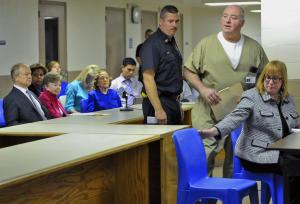
Kennedy cousin Michael Skakel was granted a new trial on Wednesday by a Connecticut judge who ruled his attorney failed to adequately represent him when he was convicted in 2002 of killing his neighbor in 1975.
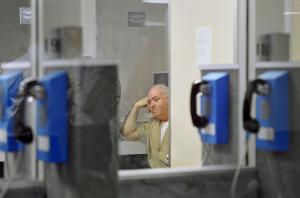
The ruling by Judge Thomas Bishop marked a dramatic reversal after years of unsuccessful appeals by Skakel, the 52-year-old nephew of Robert F. Kennedy's widow, Ethel Kennedy. Skakel is serving 20 years to life.
Bridgeport State's Attorney John Smriga said prosecutors will appeal the decision.
Skakel's current attorney, Hubert Santos, said he expects to file a motion for bail on Thursday. If a judge approves it, Skakel could then post bond and be released from prison.
"We're very, very thrilled," Santos said. "I always felt that Michael was innocent."
Skakel argued his trial attorney, Michael Sherman, was negligent in defending him when he was convicted in the golf club bludgeoning of Martha Moxley when they were 15 in wealthy Greenwich. Santos called the case weak.
Prosecutors contended Sherman's efforts far exceeded standards and that the verdict was based on compelling evidence against Skakel.
John Moxley, the victim's brother, said the ruling took him and his family by surprise and they hope the state wins an appeal.
"Having been in the courtroom during the trial, there were a lot of things that Mickey Sherman did very cleverly," Moxley said about Skakel's trial lawyer. "But the evidence was against him. And when the evidence is against you, there's almost nothing you can do.
"I don't care if it was Perry Mason," Moxley said. "The state had the evidence. It was his own words and deeds that led to the conviction."
In his ruling, the judge wrote that defense in such a case requires attention to detail, an energetic investigation and a coherent plan of defense.
"Trial counsel's failures in each of these areas of representation were significant and, ultimately, fatal to a constitutionally adequate defense," Thomas wrote. "As a consequence of trial counsel's failures as stated, the state procured a judgment of conviction that lacks reliability."
During a state trial in April on the appeal, Skakel took the stand and blasted Sherman's handling of the case, portraying him as an overly confident lawyer having fun and basking in the limelight while making fundamental mistakes from poor jury picks to failing to track down key witnesses.
Santos argued that the prosecutors' case rested entirely on two witnesses of dubious credibility who came forward with stories of confessions after 20 years and the announcement of a reward. Skakel had an alibi, he said.
Santos contends Sherman was "too enamored with the media attention to focus on the defense." Sherman told criminal defense attorneys at a seminar in Las Vegas six months before the trial that one of his goals in representing Skakel was to have a "good time," Santos said.
"Defending a murder charge is not about enjoying oneself, it is about zealously advocating for the client and providing him with the assistance guaranteed by our constitution," Santos wrote in court papers. "It is not about getting invited to A-list parties in New York City, or launch parties for the trendy new television show, or going to the Academy Awards and all the 'cool parties' afterwards."
Sherman has said he did all he could to prevent Skakel's conviction and denied he was distracted by media attention in the high-profile case.
Santos contends Sherman failed to obtain or present evidence against earlier suspects, failed to sufficiently challenge the state's star witness and other testimony and made risky jury picks including a police officer.
Prosecutors countered that Sherman spent thousands of hours preparing the defense, challenged the state on large and small legal issues, consulted experts and was assisted by some of the state's top lawyers. Sherman attacked the state's evidence, presented an alibi and pointed the finger at an earlier suspect, prosecutors said.
"This strategy failed not because of any fault of Sherman's, but because of the strength of the state's case," prosecutor Susann Gill wrote in court papers.
The state's case included three confessions and nearly a dozen incriminating statements by Skakel over the years, Gill said. She also said there was strong evidence of motive.
"His drug-addled mental state, coupled with the infuriating knowledge that his hated brother Tommy had a sexual liaison with Martha, and the fact that Martha spurned his advances, triggered the rage which led him to beat her to death with a golf club," Gill wrote.
Gill said what Sherman did with his personal time was irrelevant. She said the evidence cited by the defense was not significant and that Sherman had sound strategic reasons for his decisions.
Skakel, who maintains his innocence, was denied parole last year and was told he would not be eligible again to be considered for release for five years.
Wednesday, October 23, 2013


Tuesday, October 22, 2013
Police: Nev. school shooter, 12, got gun from home - Yahoo News
Police: Nev. school shooter, 12, got gun from home - Yahoo News
JohnButts@JBMedia - Reports:
The 12-year-old student who opened fire on a Nevada middle school campus, wounding two classmates and killing a teacher before he turned the gun on himself, got the weapon from his home, authorities said Tuesday.
Washoe County School District police said they are still working to determine how the boy obtained the 9mm semi-automatic Ruger handgun used in the Monday morning spree at Sparks Middle School. The boy's parents are cooperating with authorities and could face charges in the case, police said.
Authorities say they're withholding the seventh-grader's name out of respect for his family.
At a news conference Tuesday, law enforcement and school officials again lauded the actions of 45-year-old math teacher and former Marine Michael Landsberry, who tried to stop the rampage before he was killed.
"I cannot express enough appreciation for Mr. Landsberry," Washoe County School District Superintendent Pedro Martinez said. "He truly is a hero."
The violence started before the first bell of the day rang, as students filed off buses and gathered for class. The boy opened fire outside a school building, hitting one 12-year-old student in the shoulder. He then headed toward a basketball court, where he encountered Landsberry.
The teacher walked calmly toward the shooter and lifted his hands, asking the boy to hand over his weapon.
"He was telling him to stop and put the gun down," student Jose Cazares told NBC's "Today" show Tuesday. "Then the kid, he yelled out 'No!' Like, he was yelling at him, and he shot him."
Landsberry suffered a fatal gunshot wound to the chest.
Still, his actions gave students enough time to run to safety, according to Washoe County School District Police Chief Mike Mieras.
Police said they believe the shooter at one point tried to enter the school but couldn't open the door because of emergency lockdown procedures.
After killing Landsberry, the boy fired at a second student, hitting him in the abdomen. He then shot himself in the head.
The two 12-year-old boys who were wounded are in stable condition and recovering.
Authorities provided no motive for the shooting but said they've interviewed 20 or 30 witnesses and are looking into any prior connection the victims had with the shooter.
"Everybody wants to know why — that's the big question," Sparks Deputy Police Chief Tom Miller said. "The answer is, we don't know right now."
Parents clung to their children at an evacuation center shortly after the shooting while the community struggled to make sense of the latest episode of schoolyard violence, which happened less than a year after the Newtown, Conn., massacre.
Sparks, just east of Reno, has a population of roughly 90,000.
Landsberry coached several youth sports. He also served two tours in Afghanistan with the Nevada National Guard and was well-known in the school community, Sparks Mayor Geno Martini said. Landsberry served in the Marine Corps from 1986 to 1990 and was stationed in Camp Lejeune, N.C., and Okinawa, Japan, according to military records.
The mayor praised the response from officers, who arrived at the scene within 3 minutes of the initial 911 calls to find the shooter dead.
"They got it under control very quickly and shut down the scene," said Martini, who urged listeners on a local radio station hours after the shooting to be sure all guns in their homes were safely locked away.
Students from the middle school and neighboring elementary school were evacuated to a high school, and all classes were canceled. The middle school will remain closed for the week, while an adjacent elementary school is set to reopen Wednesday.
JohnButts@JBMedia - Reports:
The 12-year-old student who opened fire on a Nevada middle school campus, wounding two classmates and killing a teacher before he turned the gun on himself, got the weapon from his home, authorities said Tuesday.
Washoe County School District police said they are still working to determine how the boy obtained the 9mm semi-automatic Ruger handgun used in the Monday morning spree at Sparks Middle School. The boy's parents are cooperating with authorities and could face charges in the case, police said.
Authorities say they're withholding the seventh-grader's name out of respect for his family.
At a news conference Tuesday, law enforcement and school officials again lauded the actions of 45-year-old math teacher and former Marine Michael Landsberry, who tried to stop the rampage before he was killed.
"I cannot express enough appreciation for Mr. Landsberry," Washoe County School District Superintendent Pedro Martinez said. "He truly is a hero."
The violence started before the first bell of the day rang, as students filed off buses and gathered for class. The boy opened fire outside a school building, hitting one 12-year-old student in the shoulder. He then headed toward a basketball court, where he encountered Landsberry.
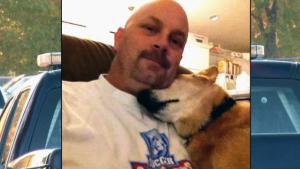
The teacher walked calmly toward the shooter and lifted his hands, asking the boy to hand over his weapon.
"He was telling him to stop and put the gun down," student Jose Cazares told NBC's "Today" show Tuesday. "Then the kid, he yelled out 'No!' Like, he was yelling at him, and he shot him."
Landsberry suffered a fatal gunshot wound to the chest.
Still, his actions gave students enough time to run to safety, according to Washoe County School District Police Chief Mike Mieras.
Police said they believe the shooter at one point tried to enter the school but couldn't open the door because of emergency lockdown procedures.
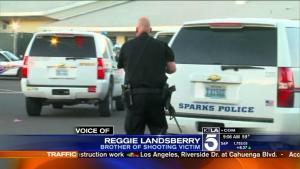
After killing Landsberry, the boy fired at a second student, hitting him in the abdomen. He then shot himself in the head.
The two 12-year-old boys who were wounded are in stable condition and recovering.
Authorities provided no motive for the shooting but said they've interviewed 20 or 30 witnesses and are looking into any prior connection the victims had with the shooter.
"Everybody wants to know why — that's the big question," Sparks Deputy Police Chief Tom Miller said. "The answer is, we don't know right now."
Parents clung to their children at an evacuation center shortly after the shooting while the community struggled to make sense of the latest episode of schoolyard violence, which happened less than a year after the Newtown, Conn., massacre.

Sparks, just east of Reno, has a population of roughly 90,000.
Landsberry coached several youth sports. He also served two tours in Afghanistan with the Nevada National Guard and was well-known in the school community, Sparks Mayor Geno Martini said. Landsberry served in the Marine Corps from 1986 to 1990 and was stationed in Camp Lejeune, N.C., and Okinawa, Japan, according to military records.
The mayor praised the response from officers, who arrived at the scene within 3 minutes of the initial 911 calls to find the shooter dead.
"They got it under control very quickly and shut down the scene," said Martini, who urged listeners on a local radio station hours after the shooting to be sure all guns in their homes were safely locked away.
Students from the middle school and neighboring elementary school were evacuated to a high school, and all classes were canceled. The middle school will remain closed for the week, while an adjacent elementary school is set to reopen Wednesday.
Monday, October 21, 2013
U.S. tries to calm Saudi anger over Syria, Iran - Yahoo News
U.S. tries to calm Saudi anger over Syria, Iran - Yahoo News
JohnButts@JBMedia - Reports:
U.S. Secretary of State John Kerry sought on Monday to calm rising tensions with Saudi Arabia, which has spurned a U.N. Security Council seat in fury at inaction over the crisis in Syria.
Saudi Arabia rejected a coveted two-year term on the council on Friday in a rare display of anger over what it called "double standards" at the United Nations. Its stance won praise from its Gulf Arab allies and Egypt.
Saudi Foreign Minister Prince Saud al-Faisal hosted a lunch for Kerry at his private residence in Paris on Monday. U.S. officials said Washington and Riyadh shared the goals of a nuclear-free Iran, an end to Syria's civil war and a stable Egypt.
A senior State Department official told reporters after the lunch that Kerry cited the advantages of being on the 15-member body, which can authorize military action, impose sanctions and set up peacekeeping operations.
"Secretary Kerry conveyed that while it is Saudi Arabia's decision to make, the U.S. values Saudi Arabia's leadership in the region and the international community," the U.S. official said.
"A seat on the UNSC affords member states the opportunity to engage directly," the official added.
The council has been paralyzed over the 31-month-old Syria conflict, with permanent members Russia and China repeatedly blocking measures to condemn Syrian President Bashar al-Assad, a longtime ally of Riyadh's regional arch-rival Iran.
Saudi Arabia backs the mostly Sunni Muslim rebels fighting to overthrow Assad. The Syrian leader, whose Alawite sect is derived from Shi'ite Islam, has support from Iran and the armed Lebanese Shi'ite movement Hezbollah. The Syrian leader denounces his foes as al Qaeda-linked groups backed by Sunni-ruled states.
Riyadh's frustration with Russia and China now extends to the United States, not only over Syria, but also over Washington's acquiescence in the fall of Egypt's Hosni Mubarak in 2011 and its new quest for a nuclear deal with Iran.
No country has previously been elected to the council and then walked away. As an incoming member, Saudi Arabia would have taken up its seat on January 1 for a two-year term. Riyadh demanded unspecified reforms in the world's top security institution.
"BRAVE SAUDI POSITION"
Saudi anger boiled over after the United States dropped the threat of military strikes in response to a poison gas attack in Damascus in August by agreeing to give up his chemical arsenal.
Saudi Arabia was also concerned about signs of a tentative reconciliation between Washington and Tehran, something Riyadh fears may lead to a "grand bargain" on the Iranian nuclear program that leaves it at a disadvantage.
Expressions of support for Saudi Arabia from its Gulf allies contained no overt criticism of U.S. policy, but echoed the kingdom's complaints about the Security Council's failure to end the war in Syria and resolve the Israeli-Palestinian dispute.
Kuwait shares Riyadh's pain, Foreign Ministry Undersecretary Khaled al-Jarallah said, citing the "bloody massacres" in Syria and the "suffering of the Palestinian people". He said the Saudi rejection of a council seat had sent a message to the world.
Plaudits also came from Cairo, which was promised billions of dollars in aid from Saudi Arabia, Kuwait and the United Arab Emirates in July after the army ousted President Mohamed Mursi. Most Gulf states view his Muslim Brotherhood with suspicion.
By contrast, Washington has cut aid to Egypt's military.
"This brave Saudi position is favored with all of Egypt's respect and appreciation," Egypt's Foreign Minister Nabil Fahmy said in a statement.
The Egyptian head of the Cairo-based Arab League, Nabil Elaraby, also said Riyadh had every right to protest against the management of the Security Council, which he said should rethink the veto-wielding powers of its five permanent members.
The Saudi decision has handed the U.N. secretary-general and the permanent council members "historic responsibility to review the role of the United Nations, its powers and its charter," UAE Foreign Minister Sheikh Abdullah bin Zayed al-Nahayan said.
Bahrain praised Riyadh's "clear and courageous stand", while Qatar suggested it could shake the world out of complacency.
Addressing his Saudi counterpart, Qatar's Foreign Minister Khalid bin Mohamed al-Attiyah wrote on Twitter: "When you are angry, you send the world into disarray, so thank you."
JohnButts@JBMedia - Reports:
U.S. Secretary of State John Kerry sought on Monday to calm rising tensions with Saudi Arabia, which has spurned a U.N. Security Council seat in fury at inaction over the crisis in Syria.
Saudi Arabia rejected a coveted two-year term on the council on Friday in a rare display of anger over what it called "double standards" at the United Nations. Its stance won praise from its Gulf Arab allies and Egypt.
Saudi Foreign Minister Prince Saud al-Faisal hosted a lunch for Kerry at his private residence in Paris on Monday. U.S. officials said Washington and Riyadh shared the goals of a nuclear-free Iran, an end to Syria's civil war and a stable Egypt.
A senior State Department official told reporters after the lunch that Kerry cited the advantages of being on the 15-member body, which can authorize military action, impose sanctions and set up peacekeeping operations.
"Secretary Kerry conveyed that while it is Saudi Arabia's decision to make, the U.S. values Saudi Arabia's leadership in the region and the international community," the U.S. official said.
"A seat on the UNSC affords member states the opportunity to engage directly," the official added.
The council has been paralyzed over the 31-month-old Syria conflict, with permanent members Russia and China repeatedly blocking measures to condemn Syrian President Bashar al-Assad, a longtime ally of Riyadh's regional arch-rival Iran.
Saudi Arabia backs the mostly Sunni Muslim rebels fighting to overthrow Assad. The Syrian leader, whose Alawite sect is derived from Shi'ite Islam, has support from Iran and the armed Lebanese Shi'ite movement Hezbollah. The Syrian leader denounces his foes as al Qaeda-linked groups backed by Sunni-ruled states.
Riyadh's frustration with Russia and China now extends to the United States, not only over Syria, but also over Washington's acquiescence in the fall of Egypt's Hosni Mubarak in 2011 and its new quest for a nuclear deal with Iran.
No country has previously been elected to the council and then walked away. As an incoming member, Saudi Arabia would have taken up its seat on January 1 for a two-year term. Riyadh demanded unspecified reforms in the world's top security institution.
"BRAVE SAUDI POSITION"
Saudi anger boiled over after the United States dropped the threat of military strikes in response to a poison gas attack in Damascus in August by agreeing to give up his chemical arsenal.
Saudi Arabia was also concerned about signs of a tentative reconciliation between Washington and Tehran, something Riyadh fears may lead to a "grand bargain" on the Iranian nuclear program that leaves it at a disadvantage.
Expressions of support for Saudi Arabia from its Gulf allies contained no overt criticism of U.S. policy, but echoed the kingdom's complaints about the Security Council's failure to end the war in Syria and resolve the Israeli-Palestinian dispute.
Kuwait shares Riyadh's pain, Foreign Ministry Undersecretary Khaled al-Jarallah said, citing the "bloody massacres" in Syria and the "suffering of the Palestinian people". He said the Saudi rejection of a council seat had sent a message to the world.
Plaudits also came from Cairo, which was promised billions of dollars in aid from Saudi Arabia, Kuwait and the United Arab Emirates in July after the army ousted President Mohamed Mursi. Most Gulf states view his Muslim Brotherhood with suspicion.
By contrast, Washington has cut aid to Egypt's military.
"This brave Saudi position is favored with all of Egypt's respect and appreciation," Egypt's Foreign Minister Nabil Fahmy said in a statement.
The Egyptian head of the Cairo-based Arab League, Nabil Elaraby, also said Riyadh had every right to protest against the management of the Security Council, which he said should rethink the veto-wielding powers of its five permanent members.
The Saudi decision has handed the U.N. secretary-general and the permanent council members "historic responsibility to review the role of the United Nations, its powers and its charter," UAE Foreign Minister Sheikh Abdullah bin Zayed al-Nahayan said.
Bahrain praised Riyadh's "clear and courageous stand", while Qatar suggested it could shake the world out of complacency.
Addressing his Saudi counterpart, Qatar's Foreign Minister Khalid bin Mohamed al-Attiyah wrote on Twitter: "When you are angry, you send the world into disarray, so thank you."
Sunday, October 20, 2013
Violence hits Montenegro capital's first Gay Pride march - Yahoo News
Violence hits Montenegro capital's first Gay Pride march - Yahoo News
JohnButts@JBMedia - Reports:
Twenty police officers were injured on Sunday in clashes with hundreds of stone-throwing protesters opposed to the first Gay Pride march held in Montenegro's capital, a hospital said.
Police used tear gas and clubs to stop protesters throwing stones and firecrackers from getting near the marchers who had been given an official green light for their parade.
Around 60 protesters were detained and the hospital said that of the 20 policemen injured one was seriously hurt.
No information on injured protesters was immediately available.
The march was held amid tight security as more than 2,000 officers sealed off central Podgorica to keep opponents out. A police helicopter kept a constant presence during the event.
Only participants of the march and people with special accreditation were authorised to enter the city centre.
Fights broke out in several places outside the perimeter set up by security forces, windows of cafes and shops were smashed, and rubbish bins were overturned in the streets.
However, police successfully fought back repeated attempts by protesters to approach or attack the marchers.
Sexual minorities still face discrimination in the tiny former Yugoslav republic of 650,000 inhabitants, which is seeking to join the European Union.
Surveys show 70 percent of Montenegrins, who are mainly Christian Orthodox, still consider homosexuality an illness, while 80 percent believe it should be kept private.
"As of today the LGBT (lesbian, gay, bisexual and transgender) community is no longer invisible in Montenegro, but we will continue the fight for our rights," organiser Danijel Kalezic told marchers who waved rainbow flags and carried banners demanding "equal rights for everyone".
The Montenegrin government backed the event and the Minister for Human and Minority Rights Suad Numanovic was in attendance.
After the march, police evacuated participants towards a secure location, and by late afternoon calm had returned.
Interior Minister Rasko Konjevic thanked locals for their cooperation and patience.
"Podgorica citizens showed a high level of tolerance towards the participants of the march and proved that they accept diversity," he said in a statement.
Montenegro's first ever Gay Pride march was held in the coastal town of Budva in July, and was also marred by violence.
In Montenegro, as in most Balkan states, gays and lesbians live in fear of hate crimes, claiming they do not trust the authorities to protect their rights.
JohnButts@JBMedia - Reports:
Twenty police officers were injured on Sunday in clashes with hundreds of stone-throwing protesters opposed to the first Gay Pride march held in Montenegro's capital, a hospital said.
Police used tear gas and clubs to stop protesters throwing stones and firecrackers from getting near the marchers who had been given an official green light for their parade.
Around 60 protesters were detained and the hospital said that of the 20 policemen injured one was seriously hurt.
No information on injured protesters was immediately available.
The march was held amid tight security as more than 2,000 officers sealed off central Podgorica to keep opponents out. A police helicopter kept a constant presence during the event.
Only participants of the march and people with special accreditation were authorised to enter the city centre.

Fights broke out in several places outside the perimeter set up by security forces, windows of cafes and shops were smashed, and rubbish bins were overturned in the streets.
However, police successfully fought back repeated attempts by protesters to approach or attack the marchers.
Sexual minorities still face discrimination in the tiny former Yugoslav republic of 650,000 inhabitants, which is seeking to join the European Union.
Surveys show 70 percent of Montenegrins, who are mainly Christian Orthodox, still consider homosexuality an illness, while 80 percent believe it should be kept private.
"As of today the LGBT (lesbian, gay, bisexual and transgender) community is no longer invisible in Montenegro, but we will continue the fight for our rights," organiser Danijel Kalezic told marchers who waved rainbow flags and carried banners demanding "equal rights for everyone".

The Montenegrin government backed the event and the Minister for Human and Minority Rights Suad Numanovic was in attendance.
After the march, police evacuated participants towards a secure location, and by late afternoon calm had returned.
Interior Minister Rasko Konjevic thanked locals for their cooperation and patience.
"Podgorica citizens showed a high level of tolerance towards the participants of the march and proved that they accept diversity," he said in a statement.
Montenegro's first ever Gay Pride march was held in the coastal town of Budva in July, and was also marred by violence.
In Montenegro, as in most Balkan states, gays and lesbians live in fear of hate crimes, claiming they do not trust the authorities to protect their rights.
Saturday, October 19, 2013
NJ Senator-elect Cory Booker: Our generation ‘has no right to indulge in cynicism’ | The Raw Story
NJ Senator-elect Cory Booker: Our generation ‘has no right to indulge in cynicism’ | The Raw Story
JohnButts@JBMedia - Reports:
JohnButts@JBMedia - Reports:
GWEN IFILL: Now more on New Jersey's new senator-elect.
When he is sworn in, probably later this month, Cory Booker will be only the fourth African-American elected to the U.S. Senate. But he brings his own celebrity with him, including as the subject of an Oscar-nominated documentary in 2005, "Street Fight."
I spoke with him a short time ago.
Mayor Booker, congratulations on your election last night.
CORY BOOKER, D-N.J. Senator-elect: Thank you very much. I'm grateful. I'm grateful to have a chance to be on with you.
GWEN IFILL: You know, you're a big guy on Twitter. Everybody knows you do a lot of communicating with people that way, and one of the questions I posed yesterday to you on Twitter was, why does he want to come to Washington in the middle of all this?

CORY BOOKER: Well, you have got a lot of people in my world excited that you tweeted at me.
And, look, I have been a mayor who has been trying to push a city forward with a lot of great people from all sides of the aisle, and we just faced a lot of headwinds because of some of the things that often seem very obvious that Washington isn't doing to help out.
So take, for example, gun violence in my city. The majority of guns that we recover don't even come from New Jersey. They come from criminal gun runners who are not law-abiding citizens who should have a Second Amendment right. They come from criminals who can walk into secondary markets and buy weapons. And having commonsense background checks that 90 percent of Americans agree on makes sense, but we're not getting it done.
And so on a number of issues, from kids that go through my colleges and get degrees and things that can barely spell, but as soon as we educate them and use our taxpayer dollars to do that, and they graduate, they're ready to start businesses and add to our economy, we tell them they can't stay here, and we end up pushing them out of our country because they can't get a H-1B visa.
I can go through dozens and dozens of issues that would make New Jersey stronger, more economically competitive and safer. But we're just not getting it done in Washington right now, so I want to be a part of what I hope will be people coming together to get work done for the people of New Jersey and the nation.
GWEN IFILL: You just named two issues, gun control and immigration, which don't seem to be going anywhere, even in the Democratically controlled Senate. Why do you think your presence there would change that?
CORY BOOKER: Well, look, I think you and I both know that one senator, especially now the 100th in seniority, won't necessarily walk down there and everybody will be spitting sunshine and rainbows.
I'm very knowledgeable of the challenges before me. And I also go there with the right attitude. I have got to really I work hard and humbly and learn as much as I can and find creative ways to join with others to make a difference. So, I promised the people of New Jersey I was going to work hard and find creative ways to move the ball forward, and that's what I intend to do.
I know we can do better. I know America can. And I know this current state of sort of brinksmanship, zero sum game politics is not working for either party. It's not working for America, and I'm hoping that I can join with other people that want to go a different way. And I'm confident that American history is a testimony to the achievement of the impossible, and, in Newark, I come from a hard city where people said we couldn't make a difference, couldn't make a change, couldn't reverse trends like our population declining, our city tax base declining, but we have reversed those trends now.
We have done what others said couldn't be done, and I'm ready to take that to another level.
GWEN IFILL: There are a couple of different examples of what a new senator in Washington can do that you could follow, especially senators with reputations that precede them, like yours. Hillary Clinton came to Washington. She was on the backbench. She kept her head low. Ted Cruz came to Washington and he obviously didn't keep his head low, as we saw in the last several weeks.
Which example would you try to follow?
CORY BOOKER: You know, neither. I want to be myself. I want to be as authentic as possible. And that means doing like Hillary Clinton, having a humble heart, and focusing on getting work done, but also making sure I'm staying true to myself in the way that I have found the best way to get things done.
And so, in Newark, we were very tactical. You know, my first year in office, I think I spent most nights in a police car until 2:00, 3:00, 4:00 in the morning, working on crime issues, up in the morning, greeting people at schools, trying to give heart to people in our city.
But, at the same time, sometimes, we found it necessary to elevate Newark's profile, to bring attention to our city, so we can draw investment. I don't know what the strategy will be in Washington. The reality is, is, I have got to go down there, as my mentor, as people like Bill Bradley have told me to do, get to know your colleagues on both sides of the aisle, recognize that they, too, beat with the same heart, and the same type of blood.
And learn procedure of the place, because it does have its own rules. And then become a master of a lot of issues, a number of issues that you can really make your own and drive the ball forward. And then in every way possible, be a scraper. Try to find ways to score points. Hit singles and doubles for the people you swore an oath to represent.
GWEN IFILL: Last night during your acceptance speech, you said that democracy is not a spectator sport. What do you say to people who are alienated by the whole process at this point?
CORY BOOKER: Well, we cannot afford to surrender to cynicism.
I mean, think about the frustrating times of our past where many people should have thrown up their arms, when civil rights legislation kept failing, as lynching in America kept getting worse, where women were denied again and again the right to equal suffrage. You can go through our history, and there's so many times when there was justifiable reasons, even more so than now, for great criticism and frustration.
Our generation who stares at this incredible history of working through frustration to great breakthroughs has no right to indulge in cynicism. We don't. What we have is an obligation to keep working at it, to keep fighting, to never give up. And so Washington has to work for America. Our nation was founded with a bunch of founding legislators who joined together to move our country out of the blocks and get us started and every generation since then has found a way to advance the ball down the field.
And so I have never been one who indulges even cynical folks or that kind of negativity. I want to find ways to really find ways to create uncommon coalitions for uncommon results. And I know, I'm confident, I have faith that we can get some pretty remarkable things done in this country, that we're still a nation where impossible dreams can be made real.
GWEN IFILL: Which is more important to you, that you are the fourth elected African-American to the U.S. Senate in modern times, or that you are the 21st mayor to go straight to the U.S. Senate?
CORY BOOKER: I think those are both really important questions. The first, being the fourth African-American, speaks a lot to our nation and really to my state. That that wasn't a central feature in this campaign, even, shows a lot of the evolution of our state.
The latter to me is very important, because when I watch the Senate, and, again, from a distance, and I don't want to say they know all about that body or much about the internal workings, but when I step back, I often see issues that face urban spaces in America, that face urban issues. They're just not being addressed, and a lack of urgency that I have had to live with as a mayor every single day that doesn't seem to be made manifest.
And so I want to join with other legislators in that body who believe, like I do, that 85 percent of Americans live in cities or in their suburbs and that we have got -- in fact, the Brookings Institution now rightfully is talking about that if you want to create a robust economy, where the majority of our GDP is driven is in our cities, you have got to have an urban vision for America.
And I want to go down there with the practical skills that I have learned and add to that understanding and that sense of urgency, and the reality that in America right now, there are large swathes of our country who are less and less seeing the kind of social mobility that my parents saw, who are more and more finding themselves in traps economically that they can't escape because they don't have access to the basics. And that's a threat to our economy.
GWEN IFILL: Newark Mayor Cory Booker, senator-elect from New Jersey, congratulations, and thank you for joining us.
CORY BOOKER: Thank you very much, Gwen. It's great to be on with you and talk with you yet again.
North Carolina Pastor Advocates Punching Gay Acting Children | Advocate.com
North Carolina Pastor Advocates Punching Gay Acting Children | Advocate.com
JohnButts@JBMedia - Reports:
The estimates of the poor and uninsured population are from the Census Bureau's 2011 American Community Survey as provided by the University of Minnesota Population Center. Poverty rates are based on the federal poverty guidelines and family definitions used in determining Medicaid eligibility and provided by the State Health Access Data Assistance Center. Immigration status was estimated based on a methodology devised by the Pew Hispanic Center.
The status of state Medicaid expansion plans is based on a report by the federal government's Center for Medicaid<embed src='http://www.goodasyou.org/player.swf' height='340' width='480' allowscriptaccess='always' allowfullscreen='true' flashvars="&file=http%3A%2F%2Fwww.goodasyou.org%2Fmarriagesundayharris3.mp3&image=http%3A%2F%2Fwww.goodasyou.org%2Fmarriagesundayharris3.png&plugins=viral-2d"/>
JohnButts@JBMedia - Reports:
The estimates of the poor and uninsured population are from the Census Bureau's 2011 American Community Survey as provided by the University of Minnesota Population Center. Poverty rates are based on the federal poverty guidelines and family definitions used in determining Medicaid eligibility and provided by the State Health Access Data Assistance Center. Immigration status was estimated based on a methodology devised by the Pew Hispanic Center.
The status of state Medicaid expansion plans is based on a report by the federal government's Center for Medicaid<embed src='http://www.goodasyou.org/player.swf' height='340' width='480' allowscriptaccess='always' allowfullscreen='true' flashvars="&file=http%3A%2F%2Fwww.goodasyou.org%2Fmarriagesundayharris3.mp3&image=http%3A%2F%2Fwww.goodasyou.org%2Fmarriagesundayharris3.png&plugins=viral-2d"/>
Friday, October 18, 2013
Chris Hedges: The Radical Christian Right and the War on Government - Chris Hedges - Truthdig
Chris Hedges: The Radical Christian Right and the War on Government - Chris Hedges - Truthdig
JohnButts@JBMedia - Reports:
There is a desire felt by tens of millions of Americans, lumped into a diffuse and fractious movement known as the Christian right, to destroy the intellectual and scientific rigor of the Enlightenment, radically diminish the role of government to create a theocratic state based on “biblical law,” and force a recalcitrant world to bend to the will of an imperial and “Christian” America. Its public face is on display in the House of Representatives. This ideology, which is the driving force behind the shutdown of the government, calls for the eradication of social “deviants,” beginning with gay men and lesbians, whose sexual orientation, those in the movement say, is a curse and an illness, contaminating the American family and the country. Once these “deviants” are removed, other “deviants,” including Muslims, liberals, feminists, intellectuals, left-wing activists, undocumented workers, poor African-Americans and those dismissed as “nominal Christians”—meaning Christians who do not embrace this peculiar interpretation of the Bible—will also be ruthlessly repressed. The “deviant” government bureaucrats, the “deviant” media, the “deviant” schools and the “deviant” churches, all agents of Satan, will be crushed or radically reformed. The rights of these “deviants” will be annulled. “Christian values” and “family values” will, in the new state, be propagated by all institutions. Education and social welfare will be handed over to the church. Facts and self-criticism will be replaced with relentless indoctrination.
U.S. Sen. Ted Cruz—whose father is Rafael Cruz, a rabid right-wing Christian preacher and the director of the Purifying Fire International ministry—and legions of the senator’s wealthy supporters, some of whom orchestrated the shutdown, are rooted in a radical Christian ideology known as Dominionism or Christian Reconstructionism. This ideology calls on anointed “Christian” leaders to take over the state and make the goals and laws of the nation “biblical.” It seeks to reduce government to organizing little more than defense, internal security and the protection of property rights. It fuses with the Christian religion the iconography and language of American imperialism and nationalism, along with the cruelest aspects of corporate capitalism. The intellectual and moral hollowness of the ideology, its flagrant distortion and misuse of the Bible, the contradictions that abound within it—its leaders champion small government and a large military, as if the military is not part of government—and its laughable pseudoscience are impervious to reason and fact. And that is why the movement is dangerous.
The cult of masculinity, as in all fascist movements, pervades the ideology of the Christian right. The movement uses religion to sanctify military and heroic “virtues,” glorify blind obedience and order over reason and conscience, and pander to the euphoria of collective emotions. Feminism and homosexuality, believers are told, have rendered the American male physically and spiritually impotent. Jesus, for the Christian right, is a man of action, casting out demons, battling the Antichrist, attacking hypocrites and ultimately slaying nonbelievers. This cult of masculinity, with its glorification of violence, is appealing to the powerless. It stokes the anger of many Americans, mostly white and economically disadvantaged, and encourages them to lash back at those who, they are told, seek to destroy them. The paranoia about the outside world is fostered by bizarre conspiracy theories, many of which are prominent in the rhetoric of those leading the government shutdown. Believers, especially now, are called to a perpetual state of war with the “secular humanist” state. The march, they believe, is irreversible. Global war, even nuclear war, is the joyful harbinger of the Second Coming. And leading the avenging armies is an angry, violent Messiah who dooms billions of apostates to death.
Dominionists believe they are engaged in an epic battle against the forces of Satan. They live in a binary world of black and white. They feel they are victims, surrounded by sinister groups bent on their destruction. They have anointed themselves as agents of God who alone know God’s will. They sanctify their rage. This rage lies at the center of the ideology. It leaves them sputtering inanities about Barack Obama, his corporate-sponsored health care reform bill, his alleged mandated suicide counseling or “death panels” for seniors under the bill, his supposed secret alliance with radical Muslims, and “creeping socialism.” They see the government bureaucracy as being controlled by “secular humanists” who want to destroy the family and make war against the purity of their belief system. They seek total cultural and political domination.
JohnButts@JBMedia - Reports:
There is a desire felt by tens of millions of Americans, lumped into a diffuse and fractious movement known as the Christian right, to destroy the intellectual and scientific rigor of the Enlightenment, radically diminish the role of government to create a theocratic state based on “biblical law,” and force a recalcitrant world to bend to the will of an imperial and “Christian” America. Its public face is on display in the House of Representatives. This ideology, which is the driving force behind the shutdown of the government, calls for the eradication of social “deviants,” beginning with gay men and lesbians, whose sexual orientation, those in the movement say, is a curse and an illness, contaminating the American family and the country. Once these “deviants” are removed, other “deviants,” including Muslims, liberals, feminists, intellectuals, left-wing activists, undocumented workers, poor African-Americans and those dismissed as “nominal Christians”—meaning Christians who do not embrace this peculiar interpretation of the Bible—will also be ruthlessly repressed. The “deviant” government bureaucrats, the “deviant” media, the “deviant” schools and the “deviant” churches, all agents of Satan, will be crushed or radically reformed. The rights of these “deviants” will be annulled. “Christian values” and “family values” will, in the new state, be propagated by all institutions. Education and social welfare will be handed over to the church. Facts and self-criticism will be replaced with relentless indoctrination.
U.S. Sen. Ted Cruz—whose father is Rafael Cruz, a rabid right-wing Christian preacher and the director of the Purifying Fire International ministry—and legions of the senator’s wealthy supporters, some of whom orchestrated the shutdown, are rooted in a radical Christian ideology known as Dominionism or Christian Reconstructionism. This ideology calls on anointed “Christian” leaders to take over the state and make the goals and laws of the nation “biblical.” It seeks to reduce government to organizing little more than defense, internal security and the protection of property rights. It fuses with the Christian religion the iconography and language of American imperialism and nationalism, along with the cruelest aspects of corporate capitalism. The intellectual and moral hollowness of the ideology, its flagrant distortion and misuse of the Bible, the contradictions that abound within it—its leaders champion small government and a large military, as if the military is not part of government—and its laughable pseudoscience are impervious to reason and fact. And that is why the movement is dangerous.
The cult of masculinity, as in all fascist movements, pervades the ideology of the Christian right. The movement uses religion to sanctify military and heroic “virtues,” glorify blind obedience and order over reason and conscience, and pander to the euphoria of collective emotions. Feminism and homosexuality, believers are told, have rendered the American male physically and spiritually impotent. Jesus, for the Christian right, is a man of action, casting out demons, battling the Antichrist, attacking hypocrites and ultimately slaying nonbelievers. This cult of masculinity, with its glorification of violence, is appealing to the powerless. It stokes the anger of many Americans, mostly white and economically disadvantaged, and encourages them to lash back at those who, they are told, seek to destroy them. The paranoia about the outside world is fostered by bizarre conspiracy theories, many of which are prominent in the rhetoric of those leading the government shutdown. Believers, especially now, are called to a perpetual state of war with the “secular humanist” state. The march, they believe, is irreversible. Global war, even nuclear war, is the joyful harbinger of the Second Coming. And leading the avenging armies is an angry, violent Messiah who dooms billions of apostates to death.
Dominionists believe they are engaged in an epic battle against the forces of Satan. They live in a binary world of black and white. They feel they are victims, surrounded by sinister groups bent on their destruction. They have anointed themselves as agents of God who alone know God’s will. They sanctify their rage. This rage lies at the center of the ideology. It leaves them sputtering inanities about Barack Obama, his corporate-sponsored health care reform bill, his alleged mandated suicide counseling or “death panels” for seniors under the bill, his supposed secret alliance with radical Muslims, and “creeping socialism.” They see the government bureaucracy as being controlled by “secular humanists” who want to destroy the family and make war against the purity of their belief system. They seek total cultural and political domination.
Thursday, October 17, 2013
Boehner's jam: Caucus loves but won't follow him - Yahoo News
Boehner's jam: Caucus loves but won't follow him - Yahoo News
JohnButts@JBMedia - Reports:
Congress' debt-and-spending breakthrough crystalized a political contradiction.
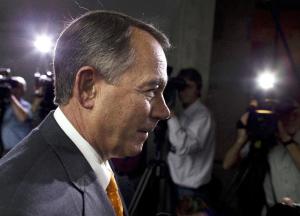
House Republicans refuse to let their supposed leader, Speaker John Boehner, steer them toward big policy decisions, leaving him to endure repeated public embarrassments. Yet they rally around Boehner as much as ever, affirming his hold on the speakership Wednesday even as they choked down a Democratic-crafted bill to reopen the government, lift the debt ceiling and give Republicans only a few small concessions.
"He's done a good job keeping us together," said Rep. Richard Hudson, R-N.C.
"I think his stock has risen tremendously, and certainly he has great security as our leader and our speaker," said Rep. John Fleming, R-La.
Imagine the praise from Republicans who voted in favor of the bill, which Boehner described as the best deal he could get under the constraints his colleagues handed him. Hudson and Fleming were among the 144 House Republicans who voted "no," forcing their leader once again to pass a high-profile measure that most GOP members opposed. Eighty-seven Republicans voted for it, joining all the Democrats in the chamber.
Hudson and Fleming also are among the House's dozens of tea party-backed Republicans, whose disdain of compromise has vastly complicated the speaker's job. Even before Wednesday, House Republicans' habit of praising but not heeding Boehner reflected the tea party's devotion to putting principle above deal-making.
Boehner is a seasoned legislator. He constantly seeks 218 votes needed to pass House bills and scraps for the best bargains he can cut with Senate Democrats and President Barack Obama.
Ho-hum, say many rank-and-file Republicans. While polls show Americans chiefly blame Republicans for the debt-and-shutdown gridlock — and GOP Sen. John McCain declared "we have lost this battle" — many of them seemed satisfied with the stand they made. That philosophy surely would have baffled many predecessors in Congress.
"The dynamics got much better," Fleming said, when Boehner "quit going to the White House to negotiate and he began to listen to us, to what we thought would work." Fleming called the debt and spending outcome an acceptable "stalemate." Democrats weren't able to reduce the "sequester" spending cuts they oppose, he said, and Republicans failed to delay or defund Obama's health care overhaul.
Republicans "lost the battle, but we're going to win the war," Rep. Tim Huelskamp, R-Kan., said of plans to keep attacking "Obamacare." In January, Huelskamp voted to dump Boehner as speaker. But he joined in Wednesday's standing ovation for Boehner in a closed-door caucus gathering.
"This is probably the best example of him following the 200 folks in our caucus who are conservative and are worried about Obamacare," Huelskamp said after the meeting.
Boehner said in a subdued statement, "Our drive to stop the train wreck that is the president's health care law will continue."
Boehner lost control of the debt-and-shutdown debate weeks ago, when tea party-backed Sen. Ted Cruz of Texas launched a national drive to close much of the government if Democrats didn't agree to "defund Obamacare."
Senior Republicans called the mission hopeless. Boehner urged his colleagues to focus on the debt ceiling instead. The threat of government default, he said, would give them greater leverage to demand spending cuts from Democrats.
It's the same advice Boehner gave in January at a widely praised House GOP retreat in Williamsburg, Va. Republicans, he said then, must decide "where's the ground that we fight on? Where's the ground that we retreat on?"
Whatever progress Boehner made in Virginia was apparently lost this month, when scores of House Republicans joined Cruz's ultimately doomed crusade.
GOP lawmakers would have fared better "had we let the speaker pick the battlefield and the battle," said Republican strategist Mike McKenna. He said Boehner and his team did the best they could "with the mess that Ted Cruz's dead-end strategy left them." He said House Republicans appreciate that Boehner didn't say, "I told you so."
Boehner confirmed his coziness with those why defy him by appointing three high-profile budget conferees who voted against the debt-funding bill. They include former vice presidential nominee Paul Ryan, R-Wis., who will lead House budget talks with the Senate in the coming weeks. A fourth GOP conferee, Boehner ally Tom Cole of Oklahoma, backed the compromise debt-funding bill.
With the government now funded through mid-January, and the debt ceiling lifted a few weeks beyond that, some lawmakers say Congress is headed toward renewed partisan brinksmanship this winter.
"All this does is delay this fight four months," said Rep. Mo Brooks, R-Ala.
Rep. Jack Kingston, R-Ga., said Republicans erred by focusing on the government funding bill instead of the debt. But he doesn't blame Boehner.
"We're a body of independent contractors, each with his own constituency," Kingston said. Boehner, he said, "is going to be OK. You know, it's a pretty tough job."
Previous House speakers found that to be true, even when their caucuses followed their advice
JohnButts@JBMedia - Reports:
Congress' debt-and-spending breakthrough crystalized a political contradiction.
House Republicans refuse to let their supposed leader, Speaker John Boehner, steer them toward big policy decisions, leaving him to endure repeated public embarrassments. Yet they rally around Boehner as much as ever, affirming his hold on the speakership Wednesday even as they choked down a Democratic-crafted bill to reopen the government, lift the debt ceiling and give Republicans only a few small concessions.
"He's done a good job keeping us together," said Rep. Richard Hudson, R-N.C.
"I think his stock has risen tremendously, and certainly he has great security as our leader and our speaker," said Rep. John Fleming, R-La.
Imagine the praise from Republicans who voted in favor of the bill, which Boehner described as the best deal he could get under the constraints his colleagues handed him. Hudson and Fleming were among the 144 House Republicans who voted "no," forcing their leader once again to pass a high-profile measure that most GOP members opposed. Eighty-seven Republicans voted for it, joining all the Democrats in the chamber.
Hudson and Fleming also are among the House's dozens of tea party-backed Republicans, whose disdain of compromise has vastly complicated the speaker's job. Even before Wednesday, House Republicans' habit of praising but not heeding Boehner reflected the tea party's devotion to putting principle above deal-making.
Boehner is a seasoned legislator. He constantly seeks 218 votes needed to pass House bills and scraps for the best bargains he can cut with Senate Democrats and President Barack Obama.
Ho-hum, say many rank-and-file Republicans. While polls show Americans chiefly blame Republicans for the debt-and-shutdown gridlock — and GOP Sen. John McCain declared "we have lost this battle" — many of them seemed satisfied with the stand they made. That philosophy surely would have baffled many predecessors in Congress.
"The dynamics got much better," Fleming said, when Boehner "quit going to the White House to negotiate and he began to listen to us, to what we thought would work." Fleming called the debt and spending outcome an acceptable "stalemate." Democrats weren't able to reduce the "sequester" spending cuts they oppose, he said, and Republicans failed to delay or defund Obama's health care overhaul.
Republicans "lost the battle, but we're going to win the war," Rep. Tim Huelskamp, R-Kan., said of plans to keep attacking "Obamacare." In January, Huelskamp voted to dump Boehner as speaker. But he joined in Wednesday's standing ovation for Boehner in a closed-door caucus gathering.
"This is probably the best example of him following the 200 folks in our caucus who are conservative and are worried about Obamacare," Huelskamp said after the meeting.
Boehner said in a subdued statement, "Our drive to stop the train wreck that is the president's health care law will continue."
Boehner lost control of the debt-and-shutdown debate weeks ago, when tea party-backed Sen. Ted Cruz of Texas launched a national drive to close much of the government if Democrats didn't agree to "defund Obamacare."
Senior Republicans called the mission hopeless. Boehner urged his colleagues to focus on the debt ceiling instead. The threat of government default, he said, would give them greater leverage to demand spending cuts from Democrats.
It's the same advice Boehner gave in January at a widely praised House GOP retreat in Williamsburg, Va. Republicans, he said then, must decide "where's the ground that we fight on? Where's the ground that we retreat on?"
Whatever progress Boehner made in Virginia was apparently lost this month, when scores of House Republicans joined Cruz's ultimately doomed crusade.
GOP lawmakers would have fared better "had we let the speaker pick the battlefield and the battle," said Republican strategist Mike McKenna. He said Boehner and his team did the best they could "with the mess that Ted Cruz's dead-end strategy left them." He said House Republicans appreciate that Boehner didn't say, "I told you so."
Boehner confirmed his coziness with those why defy him by appointing three high-profile budget conferees who voted against the debt-funding bill. They include former vice presidential nominee Paul Ryan, R-Wis., who will lead House budget talks with the Senate in the coming weeks. A fourth GOP conferee, Boehner ally Tom Cole of Oklahoma, backed the compromise debt-funding bill.
With the government now funded through mid-January, and the debt ceiling lifted a few weeks beyond that, some lawmakers say Congress is headed toward renewed partisan brinksmanship this winter.
"All this does is delay this fight four months," said Rep. Mo Brooks, R-Ala.
Rep. Jack Kingston, R-Ga., said Republicans erred by focusing on the government funding bill instead of the debt. But he doesn't blame Boehner.
"We're a body of independent contractors, each with his own constituency," Kingston said. Boehner, he said, "is going to be OK. You know, it's a pretty tough job."
Previous House speakers found that to be true, even when their caucuses followed their advice
Friday, October 11, 2013
Money Morning
Money Morning
JohnButts@JBMedia - Reports:
It's the biggest find in 50 years and the media is completely ignoring it...
It is 6 times larger than the Bakken, 17 times the size of the Marcellus formation, and 80 times larger than the Eagle Ford shale.
All told what was recently discovered outside a sleepy Australian town contains more black gold more than in all of Iran, Iraq, Canada, or Venezuela.
With current estimates at 233 billion barrels its just 30 billion shy of the estimated reserves in all of Saudi Arabia.
According to one renowned international expert, this massive discovery could eventually dwarf the oil rich kingdom as the original estimates are revised.
An advisor to six of the top 10 oil producers and active consultant to 20 world governments, Dr. Kent Moors now believes the find, "may land at 300 or 400 billion barrels," making it one of "the greatest unconventional oil discoveries any of us will see in our lifetimes."
"It's represents a bona fide redrawing of the global energy map as we know it," Moors says, "and the mainstream media is completely ignoring it."
It's centered around a place called Coober Pedy, an inhospitable speck on the map in Southern Australia.
Founded in 1915, Coober Pedy had long been the home to a scarce 1700 people who lived in residences literally carved out in its caves.
Now another 20,000 people have suddenly flocked there, making it one of the hottest real estate markets in all of Australia.
Considering the conditions the sudden stampede is remarkable - there's little to no water and temperatures routinely reach above 100 degrees Fahrenheit.
While it's obviously still just the beginning, Coober Pedy real estate agent Di Enders says her phone has been ringing off the hook since the news broke.
"I've had so many calls, you wouldn't believe it," she says. "My brain is about to explode."
"People renting don't want to surrender their houses, they know they won't get another one," she says.
The big draw is the riches about to be pulled out of a vast geological structure called the Arckaringa basin.
Encompassing an area in excess of 30,000 square miles, what's buried within the basin is enough black gold to completely change the global oil landscape-not to mention the lives early investors.
Analysts now believe ground zero will be much like is was in Saudi Arabia in the 1950's.
And according to the inner circle briefing below by Dr. Moors, there's one little company that controls the whole thing.

And since Arckaringa footprint will be beyond extensive, hundreds of wells, massive infrastructure networks, gathering systems, pipelines, processing facilities and support services will vital.
The outflows from these areas have been so big they have given way to predictions that the US could overtake Saudi Arabia as the world's largest oil producer as soon as this year.
Even at the lowest estimate, the Coober Pedy fins is set to make Australia a net oil exporter; at the higher estimate, Australia would become one of the world's biggest oil exporters.
"What we're seeing up there is a very, very big deposit," says South Australia's mining minister, Tom Koutsantonis, "If the reserves and the pressure was right over millions of years and the rocks have done the things they think they've done, they think they can extract vast reserves of oil out of South Australia which would have a value of about $20 trillion."
Dependence on OPEC's crude is already slipping as the U.S. and Canada unlock unconventional oil supplies from deep underground shale deposits with new drilling techniques.
Now there's even more completion bubbling up from "Down Under."
Given all of the trouble in the Middle East, the Saudi's have good reason to be alarmed.
JohnButts@JBMedia - Reports:
It's the biggest find in 50 years and the media is completely ignoring it...
It is 6 times larger than the Bakken, 17 times the size of the Marcellus formation, and 80 times larger than the Eagle Ford shale.
All told what was recently discovered outside a sleepy Australian town contains more black gold more than in all of Iran, Iraq, Canada, or Venezuela.
With current estimates at 233 billion barrels its just 30 billion shy of the estimated reserves in all of Saudi Arabia.
According to one renowned international expert, this massive discovery could eventually dwarf the oil rich kingdom as the original estimates are revised.
An advisor to six of the top 10 oil producers and active consultant to 20 world governments, Dr. Kent Moors now believes the find, "may land at 300 or 400 billion barrels," making it one of "the greatest unconventional oil discoveries any of us will see in our lifetimes."
"It's represents a bona fide redrawing of the global energy map as we know it," Moors says, "and the mainstream media is completely ignoring it."
Where the Hell is Coober Pedy?
But to people who call this place home, the oncoming oil boom means nothing will ever be the same ($20 trillion worth of oil can do that to a town).It's centered around a place called Coober Pedy, an inhospitable speck on the map in Southern Australia.
Founded in 1915, Coober Pedy had long been the home to a scarce 1700 people who lived in residences literally carved out in its caves.
Now another 20,000 people have suddenly flocked there, making it one of the hottest real estate markets in all of Australia.
Considering the conditions the sudden stampede is remarkable - there's little to no water and temperatures routinely reach above 100 degrees Fahrenheit.
While it's obviously still just the beginning, Coober Pedy real estate agent Di Enders says her phone has been ringing off the hook since the news broke.
"I've had so many calls, you wouldn't believe it," she says. "My brain is about to explode."
"People renting don't want to surrender their houses, they know they won't get another one," she says.
The big draw is the riches about to be pulled out of a vast geological structure called the Arckaringa basin.
Encompassing an area in excess of 30,000 square miles, what's buried within the basin is enough black gold to completely change the global oil landscape-not to mention the lives early investors.
Analysts now believe ground zero will be much like is was in Saudi Arabia in the 1950's.
And according to the inner circle briefing below by Dr. Moors, there's one little company that controls the whole thing.
The Death Knell for OPEC
The massive find has been likened to the Bakken and Eagle Ford shale oil projects in the US, which have created legitimate boom times in Texas and North Dakota.The outflows from these areas have been so big they have given way to predictions that the US could overtake Saudi Arabia as the world's largest oil producer as soon as this year.
Even at the lowest estimate, the Coober Pedy fins is set to make Australia a net oil exporter; at the higher estimate, Australia would become one of the world's biggest oil exporters.
"What we're seeing up there is a very, very big deposit," says South Australia's mining minister, Tom Koutsantonis, "If the reserves and the pressure was right over millions of years and the rocks have done the things they think they've done, they think they can extract vast reserves of oil out of South Australia which would have a value of about $20 trillion."
Dependence on OPEC's crude is already slipping as the U.S. and Canada unlock unconventional oil supplies from deep underground shale deposits with new drilling techniques.
Now there's even more completion bubbling up from "Down Under."
Given all of the trouble in the Middle East, the Saudi's have good reason to be alarmed.
Are the Obama administration’s ‘Promise Zones’ a promising anti-poverty strategy?
Are the Obama administration’s ‘Promise Zones’ a promising anti-poverty strategy?
JohnButts@JBMedia - Reports:
In the years immediately following the 1963 March on Washington for Jobs and Freedom, the federal government passed bold civil rights and anti-poverty legislation to address critical issues facing the nation. Among this legislation was the 1964 Economic Opportunity Act, which launched the War on Poverty, including programs like Head Start and food stamps, and other efforts to address poverty and its affects. During the administration of former president Lyndon B. Johnson, Congress authorized about $2 billion annually to fight poverty.
Today, 50 years later, the Head Start and food stamp (now Supplemental Nutrition Assistance Program or SNAP) programs are being deeply cut. Twenty -six percent of black people live below the poverty level and black unemployment is still twice as high as that of whites, just as it was in 1963. According to University of Michigan economics professor Shelton Danziger, “Americans have allowed poverty to fall off the national agenda.”
Brian Smedley, vice president and director of the Health Policy Institute at the D.C.-based Joint Center for Political and Economic Studies, sees hope for a federal response in the Obama administration’s new Promise Zones initiative. Smedley calls Promise Zones “the biggest, most promising anti-poverty strategy” in decades. The Joint Center is working with the Obama administration to build awareness about the effort.
Promise Zones are intended to coordinate and focus community-based programs of the Department of Housing and Urban Development (HUD), the Department of Education (DOE), the Department of Justice (DOJ) and the Department of Agriculture (DOA), on high-poverty communities across the country. Among the programs to be included, for example, are HUD’s Choice Neighborhoods, which helps neighborhoods with distressed public housing implement plans for transformation; DOE’s Promise Neighborhoods inspired by the Harlem Children’s Zone and intended to improve educational opportunities and life chances for children in high poverty neighborhoods; and the Byrne Criminal Justice Innovation Initiative, which works with high crime neighborhoods to control and prevent violent crime, drug abuse and gang activity. The goal of Promise Zones is to accelerate these programs by using the administration’s new “place-based” approach of integrating and aligning the resources of several federal agencies in areas of concentrated poverty. According to HUD, since 2009, the administration has invested more than $350 million in 100 of the nation’s persistent pockets of poverty.
Why is Smedley so hopeful about Promise Zones?
“Promise Zones gets the prescription right,” he says. “Past civil rights efforts such as the War on Poverty focused on helping individuals, but did not address the structural barriers to opportunity in neighborhoods where poor people of color live,” such as segregated and poor quality housing, the lack of capital and economic opportunity, inadequate schools, and transportation.
Previous HUD programs, such as Empowerment Zones, have certainly used the concept of targeting specific places to spur investment and revitalization. However, Smedley believes that the Promise Zones approach of cooperating across agencies to locate a range of federal programs in poor neighborhoods, can better attract business investment and help lessen poverty.
Smedley is also encouraged that the Promise Zones strategy is being implemented as researchers, including the Joint Center, are looking more seriously at the intersection between “place,” health and economic justice.
The Joint Center held its third annual National Health Equity Conference on October 2, in Washington, D.C., which was attended by researchers, community development leaders, policy makers and practitioners from across the country. The purpose of the conference was to discuss and disseminate strategies for addressing the relationship between health and economic inequities. Smedley points to “a large body of research which shows that the places where people live have a direct impact on their health status.” He explains that for many people of color, poor socio-economic status also means poor health. He believes that Promise Zones provide an opportunity to learn more about how stimulating economic activity in targeted neighborhoods can improve resident’s health.
Other policy analysts aren’t so certain about the Promise Zone’s placed-based recipe. Phil Tegeler, executive director of the Poverty & Race Research Action Council, says programs, such as Promise Neighborhoods, that will make up the Promise Zones are worthy efforts. However, he is concerned that they are too focused on keeping the poor in distressed communities.
Poor families “need to have the choice to move to higher income neighborhoods,” said Tegeler, who believes that HUD should make more funding available for programs that expand housing choice outside of areas of extreme poverty. This is a particularly note worthy critique given research which shows the harmful effects on children of growing up in poverty-stricken neighborhoods
Over the next four years, the Obama administration will designate 20 high poverty communities as Promise Zones. These communities will not receive direct funding, but will benefit from tax incentives (if enacted by Congress) to encourage private business investment, intensive assistance from federal agencies to help them make the best use of existing federal funding, and priority access to federal investments made under the administration’s placed–based approach.
Of course there are no “promises” with the Promise Zones strategy. There are many factors that could get in the way of success. Over the past two decades, private foundations have spent significant resources investing in place-based initiatives and produced plenty of evidence that much can go wrong. For example, any effort to alleviate entrenched poverty requires a long time horizon, and few funders — public, private or philanthropic — have the resources or patience to stick with these initiatives if they don’t show early positive results. Multi-dimensional, place-based projects are expensive and often funders don’t provide adequate resources. Promise Zones will not receive direct funding and the resources for which they can apply appear limited, given what has been spent in these areas so far.The War on Poverty spent billions in 1960’s dollars and was still considered under-funded by some.
In addition, tax incentives, designed to attract private businesses to the zones, still need to be approved by Congress. As things stand now between Congress and the administration, that could be a long shot. Also, many communities that have experienced years of disinvestment do not have the infrastructure to successfully implement and sustain a complex revitalization effort without intense, continuous capacity development — which of course means time and resources. Finally, these projects are getting underway in a very fragile economy and any downturn, national or local, could hamper the best intentions.
Despite the cautions and questions, it’s encouraging to see the Obama administration at least attempting to move the federal government to address poverty and inequality. Is it bold or well funded enough? Of course not, but in this economic and political environment “bold” is highly unlikely. Still, maybe we can learn something from this limited Promise Zones initiative to help move the needle in the fight against inequality. In this case, I’d like to see America prove Professor Danziger wrong.
JohnButts@JBMedia - Reports:
In the years immediately following the 1963 March on Washington for Jobs and Freedom, the federal government passed bold civil rights and anti-poverty legislation to address critical issues facing the nation. Among this legislation was the 1964 Economic Opportunity Act, which launched the War on Poverty, including programs like Head Start and food stamps, and other efforts to address poverty and its affects. During the administration of former president Lyndon B. Johnson, Congress authorized about $2 billion annually to fight poverty.
Today, 50 years later, the Head Start and food stamp (now Supplemental Nutrition Assistance Program or SNAP) programs are being deeply cut. Twenty -six percent of black people live below the poverty level and black unemployment is still twice as high as that of whites, just as it was in 1963. According to University of Michigan economics professor Shelton Danziger, “Americans have allowed poverty to fall off the national agenda.”
Brian Smedley, vice president and director of the Health Policy Institute at the D.C.-based Joint Center for Political and Economic Studies, sees hope for a federal response in the Obama administration’s new Promise Zones initiative. Smedley calls Promise Zones “the biggest, most promising anti-poverty strategy” in decades. The Joint Center is working with the Obama administration to build awareness about the effort.
Promise Zones are intended to coordinate and focus community-based programs of the Department of Housing and Urban Development (HUD), the Department of Education (DOE), the Department of Justice (DOJ) and the Department of Agriculture (DOA), on high-poverty communities across the country. Among the programs to be included, for example, are HUD’s Choice Neighborhoods, which helps neighborhoods with distressed public housing implement plans for transformation; DOE’s Promise Neighborhoods inspired by the Harlem Children’s Zone and intended to improve educational opportunities and life chances for children in high poverty neighborhoods; and the Byrne Criminal Justice Innovation Initiative, which works with high crime neighborhoods to control and prevent violent crime, drug abuse and gang activity. The goal of Promise Zones is to accelerate these programs by using the administration’s new “place-based” approach of integrating and aligning the resources of several federal agencies in areas of concentrated poverty. According to HUD, since 2009, the administration has invested more than $350 million in 100 of the nation’s persistent pockets of poverty.
Why is Smedley so hopeful about Promise Zones?
“Promise Zones gets the prescription right,” he says. “Past civil rights efforts such as the War on Poverty focused on helping individuals, but did not address the structural barriers to opportunity in neighborhoods where poor people of color live,” such as segregated and poor quality housing, the lack of capital and economic opportunity, inadequate schools, and transportation.
Previous HUD programs, such as Empowerment Zones, have certainly used the concept of targeting specific places to spur investment and revitalization. However, Smedley believes that the Promise Zones approach of cooperating across agencies to locate a range of federal programs in poor neighborhoods, can better attract business investment and help lessen poverty.
The Joint Center held its third annual National Health Equity Conference on October 2, in Washington, D.C., which was attended by researchers, community development leaders, policy makers and practitioners from across the country. The purpose of the conference was to discuss and disseminate strategies for addressing the relationship between health and economic inequities. Smedley points to “a large body of research which shows that the places where people live have a direct impact on their health status.” He explains that for many people of color, poor socio-economic status also means poor health. He believes that Promise Zones provide an opportunity to learn more about how stimulating economic activity in targeted neighborhoods can improve resident’s health.
Other policy analysts aren’t so certain about the Promise Zone’s placed-based recipe. Phil Tegeler, executive director of the Poverty & Race Research Action Council, says programs, such as Promise Neighborhoods, that will make up the Promise Zones are worthy efforts. However, he is concerned that they are too focused on keeping the poor in distressed communities.
Poor families “need to have the choice to move to higher income neighborhoods,” said Tegeler, who believes that HUD should make more funding available for programs that expand housing choice outside of areas of extreme poverty. This is a particularly note worthy critique given research which shows the harmful effects on children of growing up in poverty-stricken neighborhoods
Over the next four years, the Obama administration will designate 20 high poverty communities as Promise Zones. These communities will not receive direct funding, but will benefit from tax incentives (if enacted by Congress) to encourage private business investment, intensive assistance from federal agencies to help them make the best use of existing federal funding, and priority access to federal investments made under the administration’s placed–based approach.
Of course there are no “promises” with the Promise Zones strategy. There are many factors that could get in the way of success. Over the past two decades, private foundations have spent significant resources investing in place-based initiatives and produced plenty of evidence that much can go wrong. For example, any effort to alleviate entrenched poverty requires a long time horizon, and few funders — public, private or philanthropic — have the resources or patience to stick with these initiatives if they don’t show early positive results. Multi-dimensional, place-based projects are expensive and often funders don’t provide adequate resources. Promise Zones will not receive direct funding and the resources for which they can apply appear limited, given what has been spent in these areas so far.The War on Poverty spent billions in 1960’s dollars and was still considered under-funded by some.
In addition, tax incentives, designed to attract private businesses to the zones, still need to be approved by Congress. As things stand now between Congress and the administration, that could be a long shot. Also, many communities that have experienced years of disinvestment do not have the infrastructure to successfully implement and sustain a complex revitalization effort without intense, continuous capacity development — which of course means time and resources. Finally, these projects are getting underway in a very fragile economy and any downturn, national or local, could hamper the best intentions.
Despite the cautions and questions, it’s encouraging to see the Obama administration at least attempting to move the federal government to address poverty and inequality. Is it bold or well funded enough? Of course not, but in this economic and political environment “bold” is highly unlikely. Still, maybe we can learn something from this limited Promise Zones initiative to help move the needle in the fight against inequality. In this case, I’d like to see America prove Professor Danziger wrong.
Kenneth Bae's mother visits North Korea to see imprisoned son - CNN.com
Kenneth Bae's mother visits North Korea to see imprisoned son - CNN.com
JohnButts@JBMedia - Reports:
The mother of Kenneth Bae, the American imprisoned in North Korea, has arrived in the country to visit her ailing son, according to a friend of the family.
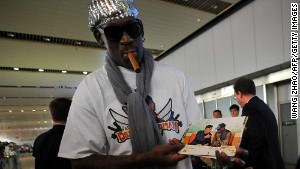 Rodman: Jailed American not my problem
 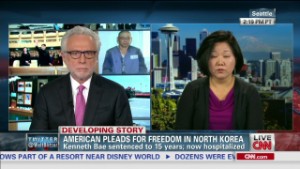 Imprisoned American's sister speaks out
 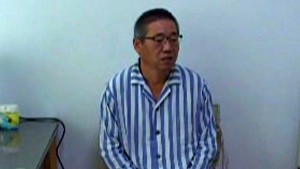 Imprisoned American's health failing
  Sister: Kenneth Bae is too weak to work
JohnButts@JBMedia - Reports:
The mother of Kenneth Bae, the American imprisoned in North Korea, has arrived in the country to visit her ailing son, according to a friend of the family.
Earlier this year, Bae, a Korean-American, was sentenced to 15 years in a North Korean labor camp for what the government called "hostile acts."
His family has not been able to see him for almost a year since his November 3 arrest in North Korea.
"As a mother, I worry endlessly about his health," said his mother, Myunghee Bae in a videotaped statement. "I want to see him, comfort and hold him in person. I miss him so much."
Rodman: Jailed American not my problem Imprisoned American's sister speaks out Imprisoned American's health failing Sister: Kenneth Bae is too weak to work Bae, of Lynwood, Washington, said that she pleaded with the North Korean authorities to let her visit her son, and expressed gratitude for granting permission. She is expected to be in North Korea for five days with the goal of encouraging her son who has become ill, according to a website dedicated to Kenneth Bae's freedom.
In a prison interview released in July, Kenneth Bae had spoken of health problems including diabetes, high blood pressure, fatty liver and a back problem. He looked noticeably thinner and wore a blue prison garment streaked with sweat and dirt.
His family say he has lost more than 50 pounds.
"My heart was broken into pieces when his prison interview was released on July 3," said his mother, in her statement. "His appearance was very shocking, he looked so different, and he lost so much weight. I could not believe that prisoner was my son."
Bae was moved to a hospital for serious health problems, his sister, Terri Chung had told CNN in August.
In previous interviews, Chung has said that her brother suffers from health problems including severe back and leg pain, kidney stones, dizziness, blurred vision and loss of vision. He was already dealing with diabetes.
His family and friends have asked North Korea for mercy and the United States for help in securing his release.
U.S. officials have repeatedly called on North Korea to release Bae. In August, the two countries appeared close, but North Korea rescinded an invitation to a U.S. envoy. Ambassador Robert King, President Barack Obama's special envoy for North Korean human rights issues, had been expected to fly to Pyongyang to try to win his freedom.
Bae was arrested last year after arriving as a tourist in Rason City, a port in the northeastern corner of North Korea. His sister says that Bae is the owner of a tour company and was in North Korea for work.
The North Korean government accuses Bae of setting up bases in China for the purpose of "toppling" the North Korean government, encouraging North Korean citizens to bring down the government and conducting a "malignant smear campaign."
The country's state media also says that Bae had planned what it called a "Jericho operation" to bring down North Korea through religious activities. They have suggested that Bae could have been sentenced to death, but avoided it through "candid confession of his crimes."
On the eve of her trip, his mother looked solemnly into the camera, expressing her anxiety.
"It's hard to describe the agony of the past year since my son has been imprisoned in the DPRK," she said in a released statement. "I spend every day thinking about him and praying for his homecoming."
Thursday, October 10, 2013
Libya PM freed after several hours held by militiamen - Yahoo News
Libya PM freed after several hours held by militiamen - Yahoo News
JohnButts@JBMedia - Reoprts:
Libyan Prime Minister Ali Zeidan was seized by gunmen Thursday and held for several hours before being freed, in the latest example of the lawlessness prevailing since Moamer Kadhafi's overthrow.
The premier appeared in good health when he arrived at government headquarters after his ordeal at the hands of former rebel militiamen, waving to waiting well-wishers as he climbed out of an armoured car.
"I hope this problem will be resolved with reason and wisdom" and without any "escalation," Zeidan later said in comments broadcast by state television as he left a cabinet meeting.
The pre-dawn seizure of Zeidan came five days after US commandos embarrassed and angered the government by capturing senior Al-Qaeda suspect Abu Anas al-Libi on the streets of Tripoli and whisking him away to a warship in the Mediterranean.
Witnesses said Zeidan was held at a police station south of the capital, and that his captors released him after armed residents surrounded the building and demanded he be let go.
Government spokesman Mohamed Kaabar told state news agency LANA the premier had been "freed, not released," without providing further details.
An employee at the hotel -- where Zeidan had taken up residence for security reasons -- told AFP a "large number of armed men" had entered the building but that the staff did not know what was happening.
A government statement said Zeidan had been taken "to an unknown destination for unknown reasons by a group" of men believed to be former rebels.
Moments before news broke that Zeidan had been freed, Deputy Prime Minister Al-Seddik Abdelkarim vowed that the government would not give into the demands of the perpetrators of a "criminal act."
"The government will not give in to blackmail by anyone," he said.
After being freed, Zeidan met with his ministers and members of the General National Congress (GNC) -- Libya's highest political authority.
Ministers had already met in his absence earlier in the day for an emergency session.
The Operations Cell of Libyan Revolutionaries, former rebels who had roundly denounced Libi's abduction and blamed Zeidan's government for it, said it had "arrested" the premier under orders from the public prosecutor.
But the cabinet said on its Facebook page that ministers were "unaware of immunity being lifted or of any arrest warrant" for him.
Later, the Brigade for the Fight against Crime, a police division made up of former rebels, said it was holding Zeidan, according to the official LANA news agency.
The government said it suspected both groups of being behind the abduction.
The two groups fall under the control of the defence and interior ministries but largely operate autonomously.
A country awash with weapons
Two years after the revolution that toppled Kadhafi, Libya's new authorities are still struggling to rein in tribal militias and groups of former rebels.
Many Libyans blame political rivalries for the problems plaguing a country awash with militias and weaponry left over from the 2011 NATO-backed rebellion.
Zeidan, who was named premier a year ago, had condemned the US capture of Libi and insisted that all Libyans should be tried on home soil.
The GNC has demanded that Washington "immediately" hand Libi back, claiming his capture was a flagrant violation of Libyan sovereignty.
Libi -- whose real name is Nazih Abdul Hamed al-Raghie -- was on the FBI's most wanted list with a $5 million (3.7 million euro) bounty on his head for his alleged role in the 1998 twin bombings of US embassies in East Africa.
US Secretary of State John Kerry denounced Zeidan's abduction as "thuggery," while UN chief Ban Ki-moon condemned it "in the strongest possible terms."
Britain, which along with France had led the creation of a NATO no-fly zone in Libya at the start of the uprising, had earlier condemned the kidnapping and called for Zeidan's "immediate release."
NATO Secretary General Anders Fogh Rasmussen welcomed Zeidan's release but said "the situation in the country is a matter of concern" and that the international community has the "responsibility to help Libyan authorities."
Public anger in Libya is growing as widespread violence -- including political assassinations -- proliferates, particularly in the east of the country.
A number of foreign missions have come under attack in Tripoli and in the eastern city of Benghazi, the cradle of the 2011 revolution.
On September 11, 2012, four Americans, including the ambassador, were killed when militants swarmed into the US consulate in Benghazi.
JohnButts@JBMedia - Reoprts:
Libyan Prime Minister Ali Zeidan was seized by gunmen Thursday and held for several hours before being freed, in the latest example of the lawlessness prevailing since Moamer Kadhafi's overthrow.
The premier appeared in good health when he arrived at government headquarters after his ordeal at the hands of former rebel militiamen, waving to waiting well-wishers as he climbed out of an armoured car.
"I hope this problem will be resolved with reason and wisdom" and without any "escalation," Zeidan later said in comments broadcast by state television as he left a cabinet meeting.
The pre-dawn seizure of Zeidan came five days after US commandos embarrassed and angered the government by capturing senior Al-Qaeda suspect Abu Anas al-Libi on the streets of Tripoli and whisking him away to a warship in the Mediterranean.
Witnesses said Zeidan was held at a police station south of the capital, and that his captors released him after armed residents surrounded the building and demanded he be let go.
Government spokesman Mohamed Kaabar told state news agency LANA the premier had been "freed, not released," without providing further details.
An employee at the hotel -- where Zeidan had taken up residence for security reasons -- told AFP a "large number of armed men" had entered the building but that the staff did not know what was happening.
A government statement said Zeidan had been taken "to an unknown destination for unknown reasons by a group" of men believed to be former rebels.
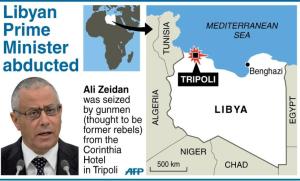
Moments before news broke that Zeidan had been freed, Deputy Prime Minister Al-Seddik Abdelkarim vowed that the government would not give into the demands of the perpetrators of a "criminal act."
"The government will not give in to blackmail by anyone," he said.
After being freed, Zeidan met with his ministers and members of the General National Congress (GNC) -- Libya's highest political authority.
Ministers had already met in his absence earlier in the day for an emergency session.
The Operations Cell of Libyan Revolutionaries, former rebels who had roundly denounced Libi's abduction and blamed Zeidan's government for it, said it had "arrested" the premier under orders from the public prosecutor.
But the cabinet said on its Facebook page that ministers were "unaware of immunity being lifted or of any arrest warrant" for him.
Later, the Brigade for the Fight against Crime, a police division made up of former rebels, said it was holding Zeidan, according to the official LANA news agency.

The government said it suspected both groups of being behind the abduction.
The two groups fall under the control of the defence and interior ministries but largely operate autonomously.
A country awash with weapons
Two years after the revolution that toppled Kadhafi, Libya's new authorities are still struggling to rein in tribal militias and groups of former rebels.
Many Libyans blame political rivalries for the problems plaguing a country awash with militias and weaponry left over from the 2011 NATO-backed rebellion.
Zeidan, who was named premier a year ago, had condemned the US capture of Libi and insisted that all Libyans should be tried on home soil.
The GNC has demanded that Washington "immediately" hand Libi back, claiming his capture was a flagrant violation of Libyan sovereignty.
Libi -- whose real name is Nazih Abdul Hamed al-Raghie -- was on the FBI's most wanted list with a $5 million (3.7 million euro) bounty on his head for his alleged role in the 1998 twin bombings of US embassies in East Africa.
US Secretary of State John Kerry denounced Zeidan's abduction as "thuggery," while UN chief Ban Ki-moon condemned it "in the strongest possible terms."
Britain, which along with France had led the creation of a NATO no-fly zone in Libya at the start of the uprising, had earlier condemned the kidnapping and called for Zeidan's "immediate release."
NATO Secretary General Anders Fogh Rasmussen welcomed Zeidan's release but said "the situation in the country is a matter of concern" and that the international community has the "responsibility to help Libyan authorities."
Public anger in Libya is growing as widespread violence -- including political assassinations -- proliferates, particularly in the east of the country.
A number of foreign missions have come under attack in Tripoli and in the eastern city of Benghazi, the cradle of the 2011 revolution.
On September 11, 2012, four Americans, including the ambassador, were killed when militants swarmed into the US consulate in Benghazi.
Wednesday, October 9, 2013
Enough is enough, pleads Senate chaplain — MSNBC
Enough is enough, pleads Senate chaplain — MSNBC
JohnButts@JBMedia - Reports:
http://tv.msnbc.com/2013/10/09/enough-is-enough-pleads-senate-chaplain/
JohnButts@JBMedia - Reports:
With lawmakers in Washington no closer to ending a stalemate that’s shuttered food banks, Head Start programs, and death benefits to military families, it’s looking increasingly likely that they’ll need some sort of divine intervention.
Senate Chaplain Barry Black has been using his daily opening prayers since before the shutdown began to admonish lawmakers for their actions, and pray that they soon resolve their differences. His Wednesday rebuke was particularly searing.
“Lord, when our federal shutdown delays payments of death benefits to the families of children dying on faraway battlefields, it’s time for our lawmakers to say enough is enough,” said Black, a Seventh-day Adventist and retired vice admiral, on the Senate floor Wednesday. “Cover our shame with the robe of your righteousness.”
It’s not the first time Black has turned to God on the shutdown. Last week he sharply criticized Congress for its “madness,” and prayed to “deliver us from the hypocrisy of attempting to sound reasonable while being unreasonable.”
One of the gravest consequences to come out of the shutdown has been the abrupt suspension of a $100,000 “death gratuity” given immediately to families of fallen soldiers until survivors benefits can take effect. Families of 26 service members have not received the benefit since the shutdown began on Oct. 1, triggered by a budget impasse over President Obama’s signature health care law.
The call to halt Obamacare has become more muted as the shutdown drags on, replaced instead by a GOP call to rein in overall government spending.
Black said he remains optimistic based on his daily interactions with lawmakers and on the feedback he’s received.
“I believe that my responsibility is to plant seeds and to water them,” he said on MSNBC Wednesday. “I am convinced that my labors, my prayers, my interactions with our lawmakers, my opportunity to serve them will bring a productive harvest.”
“I’m sending you a large bag of Miracle-Gro,” said host Thomas Roberts.http://tv.msnbc.com/2013/10/09/enough-is-enough-pleads-senate-chaplain/
Tuesday, October 8, 2013
Government shutdown ends North Carolina WIC benefits | abc11.com
Government shutdown ends North Carolina WIC benefits | abc11.com
JohnButts@JBMedia - Reports:
North Carolina Department of Health and Human Services officials said Tuesday that because of the federal government shutdown, they will have to stop issuing benefits under the federal Special Supplemental Nutrition Program for Women, Infants and Children Program, also known as WIC.
DHHS said federal WIC funds available to the state will be sufficient to cover WIC vouchers already issued for the month of October, but not sufficient to issue additional vouchers.
WIC clients should keep their nutrition appointments and continue redeeming October vouchers and WIC vendors should continue normal operations to accept existing vouchers. The Department will continue to monitor the daily availability of federal funds and will announce changes if they become necessary.
"Some of our most vulnerable citizens, pregnant and breastfeeding women, infants and young children, will be affected by the interruption of WIC services due to the federal shutdown," said DHHS Secretary Aldona Wos in a news release.
DHHS encourages families impacted by this change to apply for North Carolina's Supplemental Nutrition Assistance Program (also known as food stamps). Local WIC staff may also refer clients to food banks and pantries in their communities.
The WIC Program has an annual budget of $205 million and is 100 percent federally funded. During September, the program provided supplemental food, health care referrals and nutrition education for almost 264,000 women, infants and young children in North Carolina.
http://abclocal.go.com/wtvd/story?section=news/local&id=9279735
JohnButts@JBMedia - Reports:
North Carolina Department of Health and Human Services officials said Tuesday that because of the federal government shutdown, they will have to stop issuing benefits under the federal Special Supplemental Nutrition Program for Women, Infants and Children Program, also known as WIC.
DHHS said federal WIC funds available to the state will be sufficient to cover WIC vouchers already issued for the month of October, but not sufficient to issue additional vouchers.
WIC clients should keep their nutrition appointments and continue redeeming October vouchers and WIC vendors should continue normal operations to accept existing vouchers. The Department will continue to monitor the daily availability of federal funds and will announce changes if they become necessary.
"Some of our most vulnerable citizens, pregnant and breastfeeding women, infants and young children, will be affected by the interruption of WIC services due to the federal shutdown," said DHHS Secretary Aldona Wos in a news release.
DHHS encourages families impacted by this change to apply for North Carolina's Supplemental Nutrition Assistance Program (also known as food stamps). Local WIC staff may also refer clients to food banks and pantries in their communities.
The WIC Program has an annual budget of $205 million and is 100 percent federally funded. During September, the program provided supplemental food, health care referrals and nutrition education for almost 264,000 women, infants and young children in North Carolina.
http://abclocal.go.com/wtvd/story?section=news/local&id=9279735
Monday, October 7, 2013
VW labour chief backs UAW union bid for US works council - Yahoo Finance
VW labour chief backs UAW union bid for US works council - Yahoo Finance
JohnButts@JBMedia - Reports:
Volkswagen's top labour leader lent weight on Monday to efforts by U.S. union UAW to represent workers at the German company's U.S. plant, an issue that has raised hackles among some U.S. politicians and other critics of the UAW.
Volkswagen prefers German-style labour representation at the plant through a works council and has held talks with the UAW about how the union can be involved in setting one up.
Currently the workers at VW's plant producing the Passat car in Chattanooga, Tennessee, are not represented by a union.
But the UAW is eager to boost its membership, which has shrunk to about a quarter of the 1.5 million workers it had in 1979, and get a toehold that could allow it to expand among all foreign-owned auto companies.
However, Tennessee Republican Sen. Bob Corker has said it would be a mistake for VW to allow the UAW to organise workers at its Tennessee plant. Last month, Corker called that possibility a "job-destroying idea" and said it would make the German automaker a "laughingstock in the business world."
Bernd Osterloh, head of VW's global works council, said in a statement that forming a council was important if the plant wanted to produce other VW cars and that he would keep talking with the UAW.
VW is considering the idea of building a seven-passenger crossover utility vehicle at the Chattanooga plant rather than at its plant in Puebla, Mexico, where it already assembles the Jetta compact car and the New Beetle, a U.S. executive of VW said last month.
"We know how important that (second) vehicle is for Chattanooga," said Osterloh, who as deputy chairman of VW has a say on production decisions.
"In the interests of our U.S. colleagues, we're open to such an allocation (of an order)." Osterloh, also a member of the IG Metall engineering union, said the UAW was prepared to cede some of its rights to a works council.
Osterloh said he wanted to involve Republicans and Democrats in negotiations about a works council plan once the legal issues are clarified but said the VW principle of involving staff and management in running plants, called co-determination, was not negotiable.
He said he plans to meet politicians and other supporters and opponents of the UAW in the United States in the next few weeks.
The UAW would like VW voluntarily to recognise the U.S. union as the best choice to represent workers in Tennessee.
The UAW says it has support of a majority of Chattanooga VW's 1,567 blue-collar workers, and has collected signatures on cards authorizing that the union represent them.
ANTI-UAW PETITION
However, an anti-UAW petition signed by 563 VW Chattanooga hourly employees was delivered last Friday to plant executives, said Mike Burton, the leader of the petition drive.
Burton said that most of the signatures on the anti-UAW petition were gathered within two weeks. Burton, who works in the plant's paint shop, said he and a few co-workers will continue to collect signed petitions with a goal of attaining a majority of the 1,567 hourly workers.
Some 88 of VW's 104 plants worldwide have works councils, but U.S. labour laws require any such council to be recognised through a U.S. trade union. Tennessee Governor Bill Haslam and Senator Corker are both opposed to the UAW.
A UAW success at Chattanooga could alter the industrial relations landscape for foreign carmakers in the United States, opening the door to similar efforts at plants owned by Germany's Mercedes in Alabama and BMW in South Carolina, and possibly those owned by Japanese and South Korean automakers, analysts have said.
Corker has come out against any UAW influence over car plants in the South because he blames the union in part for the demise of Detroit as the heart of the U.S. industry.
http://finance.yahoo.com/news/vw-labour-chief-backs-uaw-173511963.html
JohnButts@JBMedia - Reports:
Volkswagen's top labour leader lent weight on Monday to efforts by U.S. union UAW to represent workers at the German company's U.S. plant, an issue that has raised hackles among some U.S. politicians and other critics of the UAW.
Volkswagen prefers German-style labour representation at the plant through a works council and has held talks with the UAW about how the union can be involved in setting one up.
Currently the workers at VW's plant producing the Passat car in Chattanooga, Tennessee, are not represented by a union.
But the UAW is eager to boost its membership, which has shrunk to about a quarter of the 1.5 million workers it had in 1979, and get a toehold that could allow it to expand among all foreign-owned auto companies.
However, Tennessee Republican Sen. Bob Corker has said it would be a mistake for VW to allow the UAW to organise workers at its Tennessee plant. Last month, Corker called that possibility a "job-destroying idea" and said it would make the German automaker a "laughingstock in the business world."
Bernd Osterloh, head of VW's global works council, said in a statement that forming a council was important if the plant wanted to produce other VW cars and that he would keep talking with the UAW.
VW is considering the idea of building a seven-passenger crossover utility vehicle at the Chattanooga plant rather than at its plant in Puebla, Mexico, where it already assembles the Jetta compact car and the New Beetle, a U.S. executive of VW said last month.
"We know how important that (second) vehicle is for Chattanooga," said Osterloh, who as deputy chairman of VW has a say on production decisions.
"In the interests of our U.S. colleagues, we're open to such an allocation (of an order)." Osterloh, also a member of the IG Metall engineering union, said the UAW was prepared to cede some of its rights to a works council.
Osterloh said he wanted to involve Republicans and Democrats in negotiations about a works council plan once the legal issues are clarified but said the VW principle of involving staff and management in running plants, called co-determination, was not negotiable.
He said he plans to meet politicians and other supporters and opponents of the UAW in the United States in the next few weeks.
The UAW would like VW voluntarily to recognise the U.S. union as the best choice to represent workers in Tennessee.
The UAW says it has support of a majority of Chattanooga VW's 1,567 blue-collar workers, and has collected signatures on cards authorizing that the union represent them.
ANTI-UAW PETITION
However, an anti-UAW petition signed by 563 VW Chattanooga hourly employees was delivered last Friday to plant executives, said Mike Burton, the leader of the petition drive.
Burton said that most of the signatures on the anti-UAW petition were gathered within two weeks. Burton, who works in the plant's paint shop, said he and a few co-workers will continue to collect signed petitions with a goal of attaining a majority of the 1,567 hourly workers.
Some 88 of VW's 104 plants worldwide have works councils, but U.S. labour laws require any such council to be recognised through a U.S. trade union. Tennessee Governor Bill Haslam and Senator Corker are both opposed to the UAW.
A UAW success at Chattanooga could alter the industrial relations landscape for foreign carmakers in the United States, opening the door to similar efforts at plants owned by Germany's Mercedes in Alabama and BMW in South Carolina, and possibly those owned by Japanese and South Korean automakers, analysts have said.
Corker has come out against any UAW influence over car plants in the South because he blames the union in part for the demise of Detroit as the heart of the U.S. industry.
http://finance.yahoo.com/news/vw-labour-chief-backs-uaw-173511963.html
Saturday, October 5, 2013
Racism Still Pushing Some Over the Edge?
Racism Still Pushing Some Over the Edge?
JohnButts@JBMedia - Reports:
Do Racial Issues Still Push Some Over the Edge?
Black Woman's Chase, Slaying Renews Interest in Theory
The suspect slain after a chase from the White House to the U.S. Capitol Thursday wasn't identified by race, unlike the Washington Navy Yard killer who left 12 others dead less than three weeks earlier. Miriam Carey wasn't at large, as was Aaron Alexis of Fort Worth, Texas, whose race was broadcast when reporters had little else to go on by way of description.
The public also saw photos of Christopher Jordan Dorner, "a linebacker-sized ex-cop with a multitude of firearms, military training and a seemingly bottomless grudge born when the LAPD fired him in 2009," in the words of the Los Angeles Times, describing him during a manhunt in February. He was believed to have killed three police officers.
All three had mental health issues, and all were African American. Is there a connection?
Amy Alexander, who co-authored the 2000 book "Lay My Burden Down: Unraveling Suicide and the Mental Health Crisis Among African-Americans" with Dr. Alvin F. Poussaint, thinks so.
"Today a woman allegedly attempted to ram her car into gates near the White House, " Alexander wrote Thursday on the Medium website. "She reportedly attempted to flee, and was shot by local law enforcement officials near the U.S. Capitol Building. Two weeks ago, a gunman who was apparently suffering from mental illness that led him to believe that unseen forces were out to get him shot and killed 12 workers at the Navy Yard in the District of Columbia before officers shot him dead.
"The gunman in the Navy Yard tragedy was black, and early reports of today's incident indicate that the driver of the car that seemed to be trying to [breach] security at the White House may have been black. Were their respective mental states affected by race in America? Scoff if you like. I consider this a legitimate area of inquiry.
"The race of these two individuals who caused these violent outbursts is both important and possibly not so important — what matters to me is that violence appeared to be their court of last resort. The motivations of their respective choices are worth examining, once we learn more about their lives.
"What's obvious right now, though, is this: We're trapped in an endless loop of denial when it comes to race and violence in America.
"We are living a weird mash-up of the Dickensian cliche — 'the best of times, the worst of times' — and 'Groundhog Day.' America sits atop the list of developed nations in terms of GDP, military might, and at least several cultural and intellectual sectors.
"We have twice elected a Black American man as President. We do not live — as was the case in my childhood — under the constant fear of a nuclear attack. We haven't had a major race-related urban disturbance since 1992.
"And yet, our Original Sin — racism — continues to haunt America, including blacks and whites. Several years ago, I had the pleasure of working with one of the world's most prominent psychiatrists, Alvin F. Poussaint, of the Harvard Medical School. We wrote a nonfiction book examining people of color in America and mental health. Dr. Poussaint joins other black clinical mental health experts in exploring a theory that gets little coverage in the press: Black people in America are experiencing something known as Post-traumatic Slave Syndrome (PTSS). The syndrome affects whites, too.
"As Dr. P. lays it out, the symptoms are highly detrimental to Blacks, foremost, though they are debilitating for whites too if in less acute forms and at fewer points that are immediately life-shortening. For Blacks, the symptoms and expressions of PTSS include fatalistic outlook, self-destructive behavior, and hopelessness; risky-behaviors including putting oneself in danger of violence, behaving violently toward others; over-eating, smoking, drinking to excess, and drug abuse. For whites, holding racist beliefs and bigoted [ideas] is a form of mental illness that can lead to symptomatic physical health risks such as heart disease. . . ."
After the Alexis rampage, some writers called for more attention to mental illness among African American men. "Misdiagnosing mental illness among black men has long been an acute problem — with consequences that extend beyond the Navy Yard killings to the daily gun violence throughout urban America," Courtland Milloy wrote in the Washington Post. Among Alexis' issues, a friend said, "He felt a lot of discrimination and racism with white people especially," NBC News reported.
The Los Angeles Times wrote about a manifesto that Dorner issued: "Dorner felt isolated growing up as one of the few African American children in the neighborhoods where he lived and was the victim of racism, according to the manifesto. 'My first recollection of racism was in the first grade,' Dorner allegedly wrote, recalling a fellow student at Norwalk Christian School who called him a racial slur. Dorner said he responded 'fast and hard,' punching and kicking the student."
Alexander's thoughts are worthy of follow-up by other journalists. "Main point is that there's a direct through line in our US history that links violence, racism," she told Journal-isms by email. "Add mental health and you've a perfect storm of disaster!"
Freddie Allen, National Newspaper Publishers Association: Black Women Murdered by Men Three Times Rate of White Females
Wayne Bennett, the Field Negro: Shut down and shot down in Washington.
Michael Daly, Daily Beast: What Pushed Miriam Carey to a Capitol Hill Tragedy?
Jarvis DeBerry, NOLA.com | the Times-Picayune: Could Brandajah Smith, 5, have contemplated suicide?
Emma Dumain, Roll Call: For Capitol Hill, Communication Was Fast and Furious
Matthew Kauffman, Dave Altimari and Edmund H. Mahony, Hartford Courant: Woman Killed In Washington, D.C., Was Obsessed With Obama
Anna Merlan, Village Voice: Miriam Carey, Dental Hygienist Who "Made It Out" of East New York, Identified as Capitol Suspect
Jack Mirkinson, Huffington Post: Journalists Caught In The Middle Of Capitol Hill Shooting
Mary Sanchez, Kansas City Star: Tragedy is awful, no matter where it occurs
Daniel Tepfer, Stamford (Conn.) Advocate: Fragile mental health cited in Capitol shooting
Richard Weinblatt, CNN: Did D.C. cops have to shoot to kill?
Would Cleveland Indians Fans Dress in Blackface?
"I saw these guys on last night's broadcast," Craig Calcaterra wrote Thursday for NBC Sports. "Hat tip to Ted Berg of USA Today for getting the screen cap:
"We wouldn't accept it if these guys showed up at a party in blackface," Calcaterra continued. "We wouldn't cite 'tradition' or 'enthusiasm' and act as if it wasn't racist for them to do so. If they wore blackface at a ballpark I am pretty confident that security would have them removed, for their safety among other reasons.
"But to pull Indian redface in Cleveland? Hey, no worries. Go Tribe. Quit your complaining, Calcaterra. Indeed, I'm assuming that for even mentioning this I will be accused of being an overly-sensitive P.C. liberal who doesn't understand that no one finds this offensive and, hey, my Native American father-in-law has no problem with it. If they decided not to go the ad hominem route they'd probably offer something like, 'hey, he's on the caps. So obviously it's about team spirit, not racism. It's just a cartoon character, so it's not offensive.' . . ."
Meanwhile, "The Oneida Indian Nation is taking its 'Change the Mascot' campaign a step further," the Indian Country Today Media Network reported on Thursday.
"On Monday, October 7th, the Nation plans to convene in Washington, D.C. to hold a public conference calling on the NFL and its teams to end the use of the slur, Redskins.
"The conference, which will be held in the Ritz Carlton, in the same hotel as the NFL's Fall Meeting, is open to the public and press.
"This conference comes just weeks after the Nation broadcast its 'Change the Mascot' radio advertisements, and months after students at Cooperstown Central School District in Cooperstown, New York, made national news by voting to change their teams' name from 'Redskins' to the 'Hawkeyes.’ . . ."
Phillip Morris, Plain Dealer, Cleveland: Cleveland reach out and touch the dream that is the 2013 Indians
Joanna Schroeder, Good Men Project: Poster Puts the Racism of the Cleveland Indians Iconography Into Embarrassing Context
Five Points the Press Misses in Covering Health Care Act
"I've identified five points that the press, for the most part, failed to adequately cover" in reporting on the debate over President Obama's Affordable Care Act, Trudy Lieberman wrote Wednesday for Columbia Journalism Review. "These are threads that would have helped people understand what the law is all about, as well as comprehend the ongoing backlash.
"1. The press did not make clear enough to the public what the law would do. . . .
"2. Reporters did not adequately explain how Obamacare was financed, and why — why the modest wealth redistribution the ACA calls for is necessary to bring health insurance to more Americans. . . .
"3. Another tough topic the press has avoided is the individual mandate and why it is necessary. . . .
"4. The media failed their audiences by passing along the spin from the law's supporters. . . .
"5. Reporters failed to truly explain Obamacare's Republican roots — and the irony of the Republican backlash against the law. . . ."
She also wrote, "Going forward, Obamacare becomes three distinct stories: the consumer story that helps people buy a very complicated product; the business story that comes with myriad questions about how the law will actually work; and, the ongoing political story . . . about wealth redistribution and who will support those who cannot pay for their medical care. But to tell all these stories well, to better explain to the public what Obamacare does and does not do (and why, and how), reporters must to go beyond what the politicians and other stakeholders are talking about. Every time."
Perry Bacon Jr., the Grio: Why blacks will suffer the most from Republicans' Obamacare opposition
Charles M. Blow, New York Times: Minority Rules
Ta-Nehisi Coates blog, the Atlantic: 'Immorality' and Obamacare
Ta-Nehisi Coates blog, the Atlantic: Obamacare and the Conscience of a Radical
Ta-Nehisi Coates blog, the Atlantic: A Rising Tide Lifts All Yachts
Peniel E. Joseph, The Root: Obamacare Isn't Big Enough
Roland S. Martin, Creators Syndicate: Obama Can't Bow Down to Pathetic GOP Antics
Askia Muhammad, Washington Informer: House Tea Party Caucus like a Ghetto High School Gang
Ruben Navarrette Jr., Washington Post Writers Group: Playing the blame game
Charlene Obernauer, Huffington Post: 'Obamacare' vs. 'Affordable Care Act': Why Words Matter
Eugene Robinson, Washington Post: John Boehner's turn to give in
Elinor Tatum, New York Amsterdam News: We know the real reason for the shutdown
Sabrina Tavernise and Robert Gebeloff, New York Times: Millions of Poor Are Left Uncovered by Health Law
JohnButts@JBMedia - Reports:
Do Racial Issues Still Push Some Over the Edge?
Black Woman's Chase, Slaying Renews Interest in Theory
The suspect slain after a chase from the White House to the U.S. Capitol Thursday wasn't identified by race, unlike the Washington Navy Yard killer who left 12 others dead less than three weeks earlier. Miriam Carey wasn't at large, as was Aaron Alexis of Fort Worth, Texas, whose race was broadcast when reporters had little else to go on by way of description.
The public also saw photos of Christopher Jordan Dorner, "a linebacker-sized ex-cop with a multitude of firearms, military training and a seemingly bottomless grudge born when the LAPD fired him in 2009," in the words of the Los Angeles Times, describing him during a manhunt in February. He was believed to have killed three police officers.
All three had mental health issues, and all were African American. Is there a connection?
Amy Alexander, who co-authored the 2000 book "Lay My Burden Down: Unraveling Suicide and the Mental Health Crisis Among African-Americans" with Dr. Alvin F. Poussaint, thinks so.
"Today a woman allegedly attempted to ram her car into gates near the White House, " Alexander wrote Thursday on the Medium website. "She reportedly attempted to flee, and was shot by local law enforcement officials near the U.S. Capitol Building. Two weeks ago, a gunman who was apparently suffering from mental illness that led him to believe that unseen forces were out to get him shot and killed 12 workers at the Navy Yard in the District of Columbia before officers shot him dead.
"The gunman in the Navy Yard tragedy was black, and early reports of today's incident indicate that the driver of the car that seemed to be trying to [breach] security at the White House may have been black. Were their respective mental states affected by race in America? Scoff if you like. I consider this a legitimate area of inquiry.
"The race of these two individuals who caused these violent outbursts is both important and possibly not so important — what matters to me is that violence appeared to be their court of last resort. The motivations of their respective choices are worth examining, once we learn more about their lives.
"What's obvious right now, though, is this: We're trapped in an endless loop of denial when it comes to race and violence in America.
"We are living a weird mash-up of the Dickensian cliche — 'the best of times, the worst of times' — and 'Groundhog Day.' America sits atop the list of developed nations in terms of GDP, military might, and at least several cultural and intellectual sectors.
"We have twice elected a Black American man as President. We do not live — as was the case in my childhood — under the constant fear of a nuclear attack. We haven't had a major race-related urban disturbance since 1992.
"And yet, our Original Sin — racism — continues to haunt America, including blacks and whites. Several years ago, I had the pleasure of working with one of the world's most prominent psychiatrists, Alvin F. Poussaint, of the Harvard Medical School. We wrote a nonfiction book examining people of color in America and mental health. Dr. Poussaint joins other black clinical mental health experts in exploring a theory that gets little coverage in the press: Black people in America are experiencing something known as Post-traumatic Slave Syndrome (PTSS). The syndrome affects whites, too.
"As Dr. P. lays it out, the symptoms are highly detrimental to Blacks, foremost, though they are debilitating for whites too if in less acute forms and at fewer points that are immediately life-shortening. For Blacks, the symptoms and expressions of PTSS include fatalistic outlook, self-destructive behavior, and hopelessness; risky-behaviors including putting oneself in danger of violence, behaving violently toward others; over-eating, smoking, drinking to excess, and drug abuse. For whites, holding racist beliefs and bigoted [ideas] is a form of mental illness that can lead to symptomatic physical health risks such as heart disease. . . ."
After the Alexis rampage, some writers called for more attention to mental illness among African American men. "Misdiagnosing mental illness among black men has long been an acute problem — with consequences that extend beyond the Navy Yard killings to the daily gun violence throughout urban America," Courtland Milloy wrote in the Washington Post. Among Alexis' issues, a friend said, "He felt a lot of discrimination and racism with white people especially," NBC News reported.
The Los Angeles Times wrote about a manifesto that Dorner issued: "Dorner felt isolated growing up as one of the few African American children in the neighborhoods where he lived and was the victim of racism, according to the manifesto. 'My first recollection of racism was in the first grade,' Dorner allegedly wrote, recalling a fellow student at Norwalk Christian School who called him a racial slur. Dorner said he responded 'fast and hard,' punching and kicking the student."
Alexander's thoughts are worthy of follow-up by other journalists. "Main point is that there's a direct through line in our US history that links violence, racism," she told Journal-isms by email. "Add mental health and you've a perfect storm of disaster!"
Freddie Allen, National Newspaper Publishers Association: Black Women Murdered by Men Three Times Rate of White Females
Wayne Bennett, the Field Negro: Shut down and shot down in Washington.
Michael Daly, Daily Beast: What Pushed Miriam Carey to a Capitol Hill Tragedy?
Jarvis DeBerry, NOLA.com | the Times-Picayune: Could Brandajah Smith, 5, have contemplated suicide?
Emma Dumain, Roll Call: For Capitol Hill, Communication Was Fast and Furious
Matthew Kauffman, Dave Altimari and Edmund H. Mahony, Hartford Courant: Woman Killed In Washington, D.C., Was Obsessed With Obama
Anna Merlan, Village Voice: Miriam Carey, Dental Hygienist Who "Made It Out" of East New York, Identified as Capitol Suspect
Jack Mirkinson, Huffington Post: Journalists Caught In The Middle Of Capitol Hill Shooting
Mary Sanchez, Kansas City Star: Tragedy is awful, no matter where it occurs
Daniel Tepfer, Stamford (Conn.) Advocate: Fragile mental health cited in Capitol shooting
Richard Weinblatt, CNN: Did D.C. cops have to shoot to kill?
Would Cleveland Indians Fans Dress in Blackface?
"I saw these guys on last night's broadcast," Craig Calcaterra wrote Thursday for NBC Sports. "Hat tip to Ted Berg of USA Today for getting the screen cap:
"We wouldn't accept it if these guys showed up at a party in blackface," Calcaterra continued. "We wouldn't cite 'tradition' or 'enthusiasm' and act as if it wasn't racist for them to do so. If they wore blackface at a ballpark I am pretty confident that security would have them removed, for their safety among other reasons.
"But to pull Indian redface in Cleveland? Hey, no worries. Go Tribe. Quit your complaining, Calcaterra. Indeed, I'm assuming that for even mentioning this I will be accused of being an overly-sensitive P.C. liberal who doesn't understand that no one finds this offensive and, hey, my Native American father-in-law has no problem with it. If they decided not to go the ad hominem route they'd probably offer something like, 'hey, he's on the caps. So obviously it's about team spirit, not racism. It's just a cartoon character, so it's not offensive.' . . ."
Meanwhile, "The Oneida Indian Nation is taking its 'Change the Mascot' campaign a step further," the Indian Country Today Media Network reported on Thursday.
"On Monday, October 7th, the Nation plans to convene in Washington, D.C. to hold a public conference calling on the NFL and its teams to end the use of the slur, Redskins.
"The conference, which will be held in the Ritz Carlton, in the same hotel as the NFL's Fall Meeting, is open to the public and press.
"This conference comes just weeks after the Nation broadcast its 'Change the Mascot' radio advertisements, and months after students at Cooperstown Central School District in Cooperstown, New York, made national news by voting to change their teams' name from 'Redskins' to the 'Hawkeyes.’ . . ."
Phillip Morris, Plain Dealer, Cleveland: Cleveland reach out and touch the dream that is the 2013 Indians
Joanna Schroeder, Good Men Project: Poster Puts the Racism of the Cleveland Indians Iconography Into Embarrassing Context
Five Points the Press Misses in Covering Health Care Act
"I've identified five points that the press, for the most part, failed to adequately cover" in reporting on the debate over President Obama's Affordable Care Act, Trudy Lieberman wrote Wednesday for Columbia Journalism Review. "These are threads that would have helped people understand what the law is all about, as well as comprehend the ongoing backlash.
"1. The press did not make clear enough to the public what the law would do. . . .
"2. Reporters did not adequately explain how Obamacare was financed, and why — why the modest wealth redistribution the ACA calls for is necessary to bring health insurance to more Americans. . . .
"3. Another tough topic the press has avoided is the individual mandate and why it is necessary. . . .
"4. The media failed their audiences by passing along the spin from the law's supporters. . . .
"5. Reporters failed to truly explain Obamacare's Republican roots — and the irony of the Republican backlash against the law. . . ."
She also wrote, "Going forward, Obamacare becomes three distinct stories: the consumer story that helps people buy a very complicated product; the business story that comes with myriad questions about how the law will actually work; and, the ongoing political story . . . about wealth redistribution and who will support those who cannot pay for their medical care. But to tell all these stories well, to better explain to the public what Obamacare does and does not do (and why, and how), reporters must to go beyond what the politicians and other stakeholders are talking about. Every time."
Perry Bacon Jr., the Grio: Why blacks will suffer the most from Republicans' Obamacare opposition
Charles M. Blow, New York Times: Minority Rules
Ta-Nehisi Coates blog, the Atlantic: 'Immorality' and Obamacare
Ta-Nehisi Coates blog, the Atlantic: Obamacare and the Conscience of a Radical
Ta-Nehisi Coates blog, the Atlantic: A Rising Tide Lifts All Yachts
Peniel E. Joseph, The Root: Obamacare Isn't Big Enough
Roland S. Martin, Creators Syndicate: Obama Can't Bow Down to Pathetic GOP Antics
Askia Muhammad, Washington Informer: House Tea Party Caucus like a Ghetto High School Gang
Ruben Navarrette Jr., Washington Post Writers Group: Playing the blame game
Charlene Obernauer, Huffington Post: 'Obamacare' vs. 'Affordable Care Act': Why Words Matter
Eugene Robinson, Washington Post: John Boehner's turn to give in
Elinor Tatum, New York Amsterdam News: We know the real reason for the shutdown
Sabrina Tavernise and Robert Gebeloff, New York Times: Millions of Poor Are Left Uncovered by Health Law
Subscribe to:
Posts (Atom)